




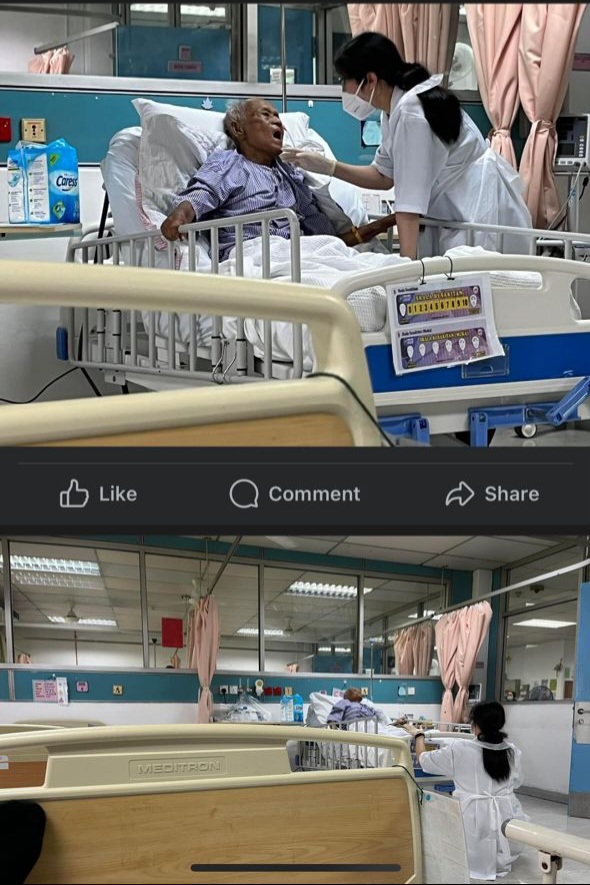
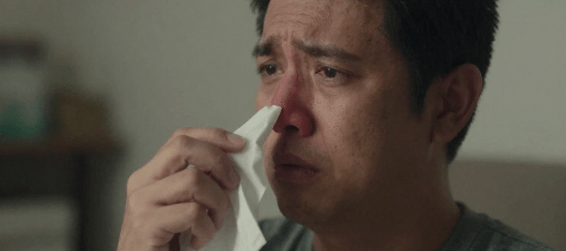
The screenshots above depict images taken from a patient’s Facebook post, illustrating our Speech Language Therapist (Ms. How Hui Ting) attending to a patient in the medical ward. Ms. How Hui Ting is seen assessing and addressing the patient’s speech issues. It’s worth noting that Speech Language Therapists (SLTs) form a crucial pillar of support within our ENT department. This article aims to delve into the roles of SLTs within the Ear, Nose, and Throat department.

Otorhinolaryngology, commonly referred to as ENT (Ear, Nose, and Throat) medicine, is a specialized branch of medicine that deals with disorders of the head and neck region. While it primarily focuses on surgical and medical treatments, the role of speech and language therapists (SLTs) within this field is often underestimated. In reality, SLTs play an indispensable role in assisting patients with communication and swallowing disorders, working closely with otorhinolaryngologists to ensure comprehensive care.
1) Communication Disorders
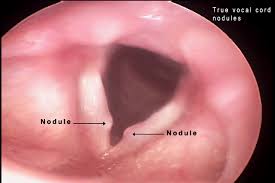
Communication disorders, which include speech, language, and voice impairments, can arise from various otorhinolaryngological conditions. Issues such as vocal cord nodules, laryngeal cancer, and traumatic injuries to the vocal cords can significantly impact a person’s ability to speak and convey their thoughts effectively. SLTs collaborate with ENT specialists to evaluate, diagnose, and treat these conditions, helping patients regain their speech abilities and improving their quality of life.
2) Swallowing Disorders and Rehabilitation
Swallowing disorders, or dysphagia, can result from structural abnormalities or functional impairments within the throat and esophagus. Otorhinolaryngologists often diagnose conditions like Zenker’s diverticulum, which can cause difficulty in swallowing. SLTs are instrumental in providing therapy to patients with dysphagia, developing personalized rehabilitation plans that include exercises to strengthen swallowing muscles and improve coordination. This collaborative approach ensures that patients not only receive medical intervention but also receive the necessary support to restore their swallowing function.

3) Voice Rehabilitation
Disorders that affect the voice, such as vocal fold paralysis and laryngitis, fall within the domain of both ENT medicine and speech therapy. SLTs work alongside otorhinolaryngologists to address these conditions comprehensively. After surgical procedures to correct vocal cord issues, SLTs guide patients through voice rehabilitation, helping them regain vocal strength and teaching techniques to prevent vocal strain. This joint effort aids patients in achieving optimal vocal health and minimizing the risk of further complications.

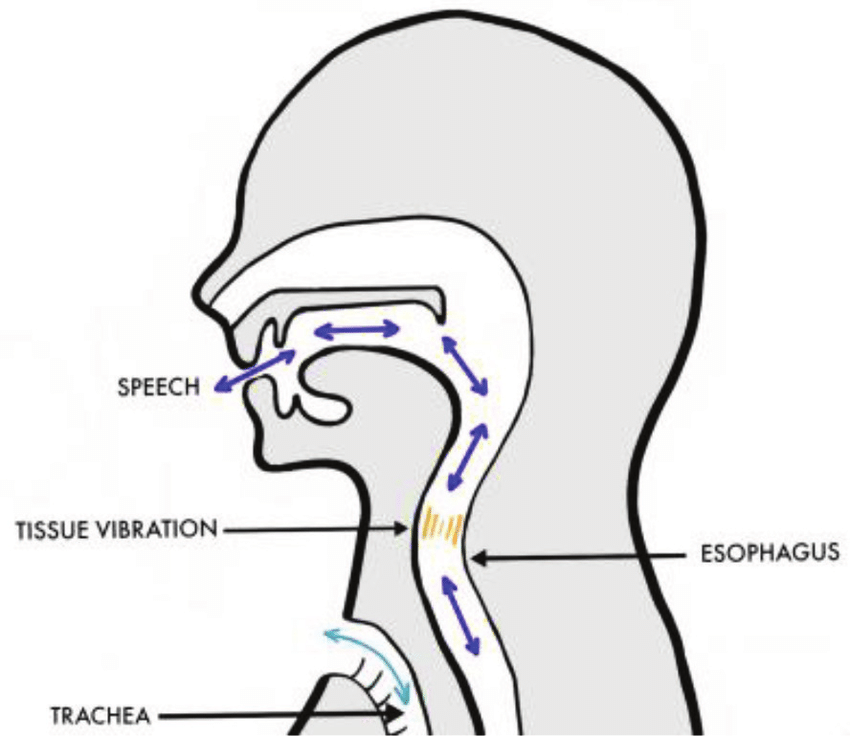
In the aftermath of a laryngectomy, where voices are silenced by necessity, speech-language patho emerge as the architects of communication revival. Armed with innovation and empathy, SLTs guide patients through uncharted territory, introducing techniques such as electrolarynx devices and esophageal speech to restore the rhythm of dialogue

4) Roles if SLTs in Paediatric Demography
Speech and language therapists (SLTs) in the pediatric population play a pivotal role in identifying, assessing, and treating a wide spectrum of communication challenges. Through early detection and personalized intervention plans, they address speech sound production, language development, social communication, fluency, voice disorders, and feeding/swallowing difficulties in children. SLTs also provide essential education to parents and caregivers, equipping them with strategies to support their child’s communication development at home. By collaborating with educators, medical professionals, and specialists, SLTs ensure comprehensive care, fostering improved communication skills, social interaction, and overall quality of life for children facing diverse communication disorders or delays.

Conclusions
The role of speech and language therapists in the field of otorhinolaryngology is pivotal, yet often overlooked. Their involvement in the assessment, diagnosis, and treatment of communication and swallowing disorders significantly contributes to the overall well-being of patients. As the healthcare landscape continues to emphasize a multidisciplinary approach, the collaboration between SLTs and otorhinolaryngologists serves as a prime example of how expertise from various fields can converge to provide the best possible care for individuals facing complex medical challenges.







 Dr. Ameen, ENT Specialist in Kuala Lumpur
Leave a comment