


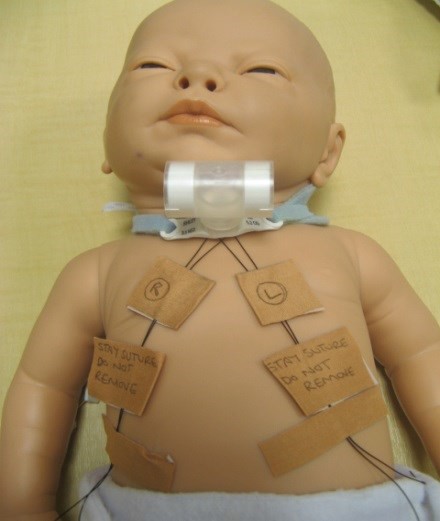
Today’s discussion revolves around the risk factors for perioperative complications in NICU infants requiring tracheostomy. This recently published paper, featured in the renowned Laryngoscope journal, explores the incidence of severe perioperative complications related to tracheostomy and identifies the associated risk factors. In summary, this data holds significant importance, particularly for NICU management teams, as it enables them to anticipate and prepare for potential adverse outcomes following tracheostomy, and to manage these risks effectively.
Please read (*buy) the full article using the link above.
Abstract
Objective
The purpose of this study was to identify risk factors for perioperative complications and long-term morbidity in infants from the neonatal intensive care unit (NICU) presenting for a tracheostomy.
Methods
This single-center retrospective cohort study included infants in the NICU presenting for a tracheostomy from August 2011 to December 2019. Primary outcomes were categorized as either a perioperative complication or long-term morbidity. A severe perioperative complication was defined as having either (1) an intraoperative cardiopulmonary arrest, (2) an intraoperative death, (3) a postoperative cardiopulmonary arrest within 30 days of the procedure, or (4) a postoperative death within 30 days of the procedure. Long-term morbidities included (1) the need for gastrostomy tube placement within the tracheostomy hospitalization and (2) the need for diuretic therapy, pulmonary hypertensive therapy, oxygen, or mechanical ventilation at 12 and 24 months following the tracheostomy.
Results
One-hundred eighty-three children underwent a tracheostomy. The mean age at tracheostomy was 16.9 weeks while the mean post-conceptual age at tracheostomy was 49.7 weeks. The incidence of severe perioperative complications was 4.4% (n = 8) with the number of pulmonary hypertension medication classes preoperatively (OR: 3.64, 95% CI: (1.44–8.94), p = 0.005) as a significant risk factor. Approximately 81% of children additionally had a gastrostomy tube placed at the time of the tracheostomy, and 62% were ventilator-dependent 2 years following their tracheostomy.
Conclusion
Our study provides critical perioperative complications and long-term morbidity data to neonatologists, pediatricians, surgeons, anesthesiologists, and families in the expected course of infants from the NICU presenting for a tracheostomy.








 Dr. Ameen, ENT Specialist in Kuala Lumpur
Leave a comment