


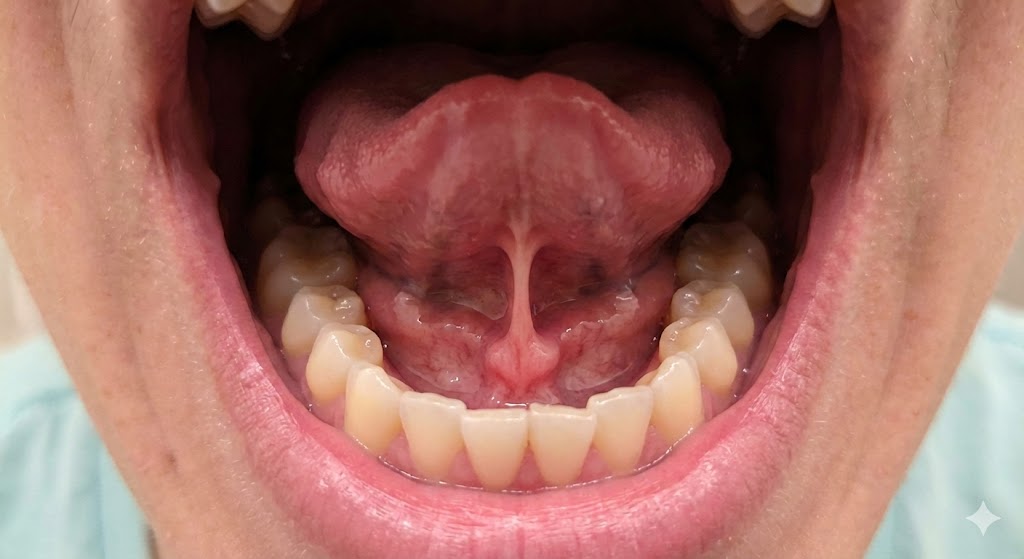
Ankyloglossia, more commonly known as tongue-tie, is a congenital condition that often raises concern, especially for new parents. This condition, meaning “tethered tongue,” can affect breastfeeding, speech, and oral hygiene. This article, summarized from reputable medical journals and trusted health websites, unpacks everything you need to know about ankyloglossia.
What is Ankyloglossia?
Ankyloglossia is a condition where the thin band of tissue under the tongue, called the lingual frenulum, is unusually short, thick, or tight. This frenulum anchors the tip of the tongue to the floor of the mouth, restricting the tongue’s range of motion.
Typically, the frenulum separates before birth to allow for free tongue movement. When it remains attached, it is known as ankyloglossia.
⚠️ Symptoms and Signs of Ankyloglossia
The symptoms of ankyloglossia vary depending on age and severity, but most primarily affect tongue function.
In Infants:
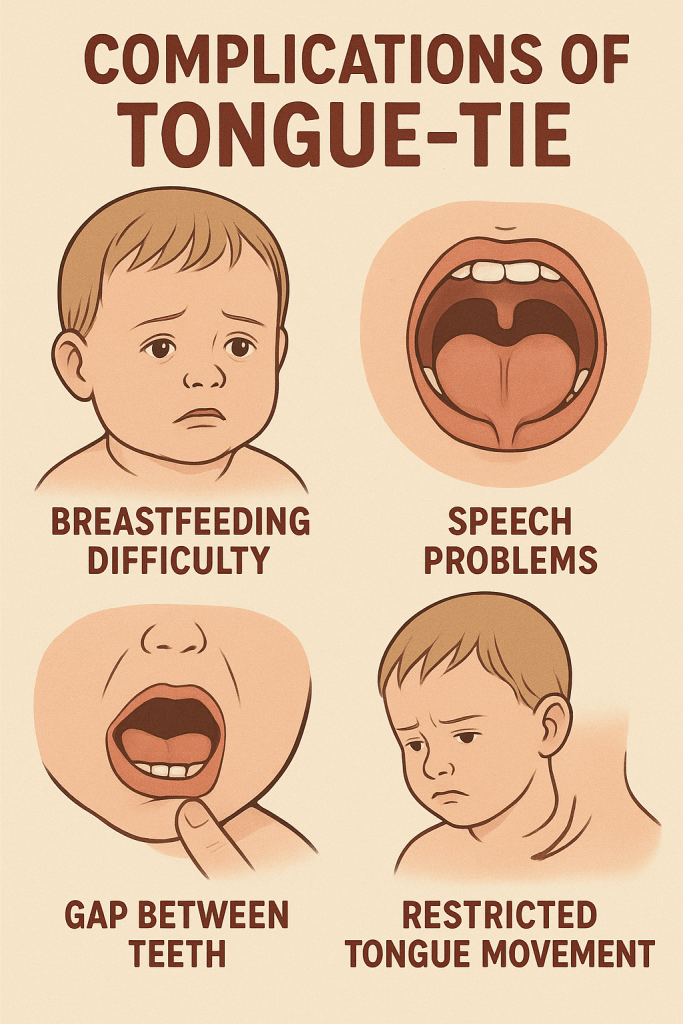
- Feeding Problems: Difficulty latching onto the breast, frequently releasing the latch, or nursing too long/too often.
- Maternal Pain: The mother’s nipples become sore or damaged (chafed) due to improper latch.
- Weight Gain: Slow weight gain (poor weight gain) in the baby.
- ‘Clicking’ Sound: Producing a ‘clicking’ sound while breastfeeding or bottle-feeding.
- Tongue Shape: The tongue appears notched or heart-shaped when extended.
In Children & Adults:
- Restricted Tongue Movement: Difficulty extending the tongue past the lower teeth, lifting the tongue to the palate (roof of the mouth), or moving it side-to-side.
- Speech Problems: Difficulty pronouncing certain sounds like ‘r’, ‘l’, ‘t’, ‘s’, or ‘th’, leading to lisping or unclear speech.
- Oral Hygiene: Difficulty clearing food debris from teeth and gums with the tongue, increasing the risk of dental caries.
- Eating Issues: Difficulty licking lips, eating solid foods, or holding food in the mouth.
- Other Issues: Difficulty playing wind instruments and potential problems like chronic snoring or obstructive sleep apnea.
Risk Factors and Causes
The exact cause of ankyloglossia is still unknown, but it is believed to be a natural developmental anomaly, and genetic factors may play a role.
- Heredity: Ankyloglossia often runs in families. If one close family member (parent or sibling) has it, the risk of your child having it may be higher.
- Gender: The condition is reported to be three times more common in male children than females.
Examination and Diagnosis
Diagnosis of ankyloglossia is usually made through a physical examination by a healthcare professional (such as an ENT Specialist, Pediatrician, or Lactation Consultant).
The doctor will assess:
1) Frenulum Appearance: Checking if the frenulum is too short or thick.
2) Tongue Range of Motion: Using screening tools to evaluate the tongue’s ability to lift, extend, and move sideways.
3) Related Symptoms: Taking into account feeding issues (in infants) or speech/oral function problems (in children/adults).

🩹 Medical & Surgical Treatment 🔪
Not all cases of ankyloglossia require treatment. If it does not cause functional problems (like feeding or speech), observation alone may suffice, as the frenulum can sometimes loosen over time.
However, if significant problems exist, surgical treatment may be recommended.
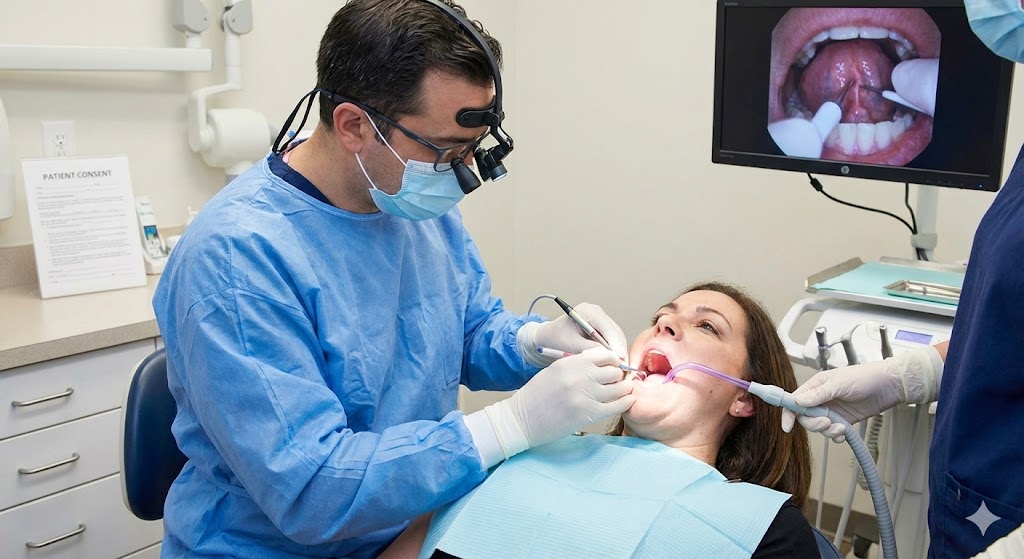
1. Frenotomy
This is a quick and simple procedure, usually performed in the clinic without the need for general anesthesia, especially in newborns.
The doctor uses sterile scissors or a laser to cut the tight lingual frenulum.
Minimal pain because the frenulum has few nerves and blood vessels.
Babies can often feed immediately after the procedure.
2. Frenuloplasty
This is a more extensive and complex procedure, often performed under general anesthesia for cases where the frenulum is too thick or requires additional repair (like stitching). It is more common in older children or adults.
Multidisciplinary Approach
For feeding problems, a Lactation Consultant plays a vital role in assisting with proper feeding techniques and positioning before or after the procedure.
For speech problems, a Speech-Language Pathologist will help with articulation and tongue function exercises.
🏡 Prevention and Home Care💪
There are no known preventative measures to avoid ankyloglossia as it is a congenital anomaly. However, there are steps that can be taken after treatment to optimize tongue function.
1) Tongue Exercises (Stretching Exercises): Specialists will often recommend tongue stretching exercises after a frenotomy/frenuloplasty. This is essential to prevent the surgical wound from re-attaching and ensure free tongue movement. These exercises usually involve gently massaging the frenulum area and moving the tongue up and to the sides.
2) Feeding Support: Seek ongoing support from a Lactation Consultant to ensure your baby latches correctly and feeding progresses smoothly.
3) Development Monitoring: Monitor your child’s speech and oral hygiene development. If problems persist, consult an ENT Specialist or Speech Therapist again.









 Dr. Ameen, ENT Specialist in Kuala Lumpur
Leave a comment