


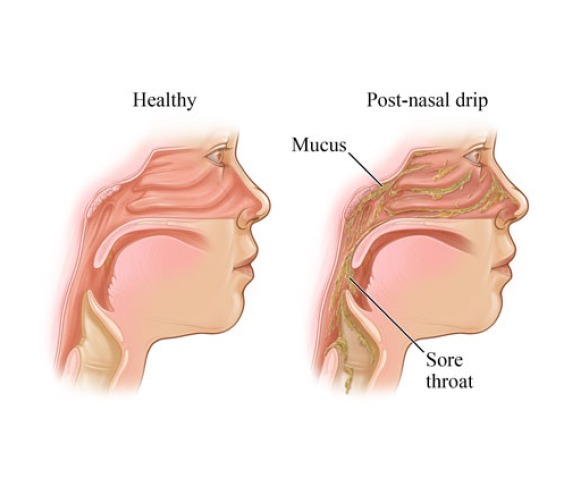
If you are dealing with Chronic Rhinosinusitis (CRS), the most exhausting symptom isn’t necessarily the congestion—it’s the relentless, hacking dry cough. Often referred to as “Upper Airway Cough Syndrome,” this isn’t a lung problem; it is a throat problem triggered by a nose that won’t stop leaking.

Research suggests that this cough is a result of both mechanical irritation and a “rewiring” of your cough receptors. Here is how to regain control based on clinical literature.
1. Desensitizing the “Cough Reflex”
A landmark study published in the journal Chest suggests that chronic post-nasal drip (PND) can lead to laryngeal hypersensitivity. Essentially, the nerves in your throat become so “twitchy” that even a breath of cool air or speaking for too long triggers a coughing fit.
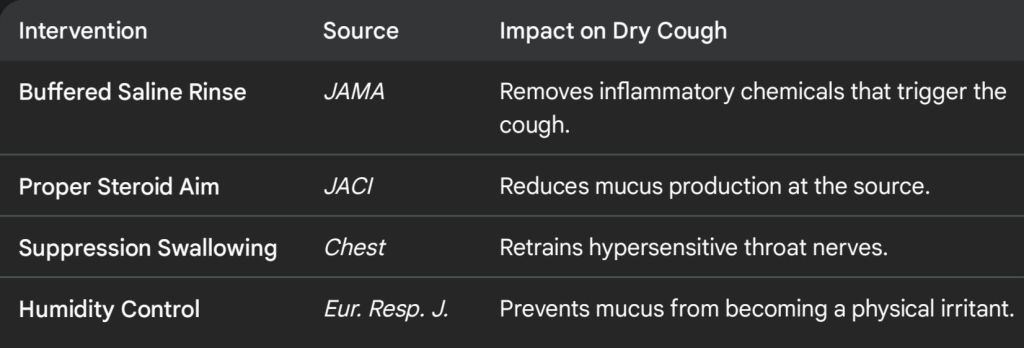
– The Strategy: Use “cough suppression” sips. When you feel the tickle, take a small sip of room-temperature water and swallow hard. Research shows this sends a message to the brain to override the cough reflex, slowly retraining the nerves to be less reactive.

2. Large-Volume Irrigation to Remove “Cough Triggers”
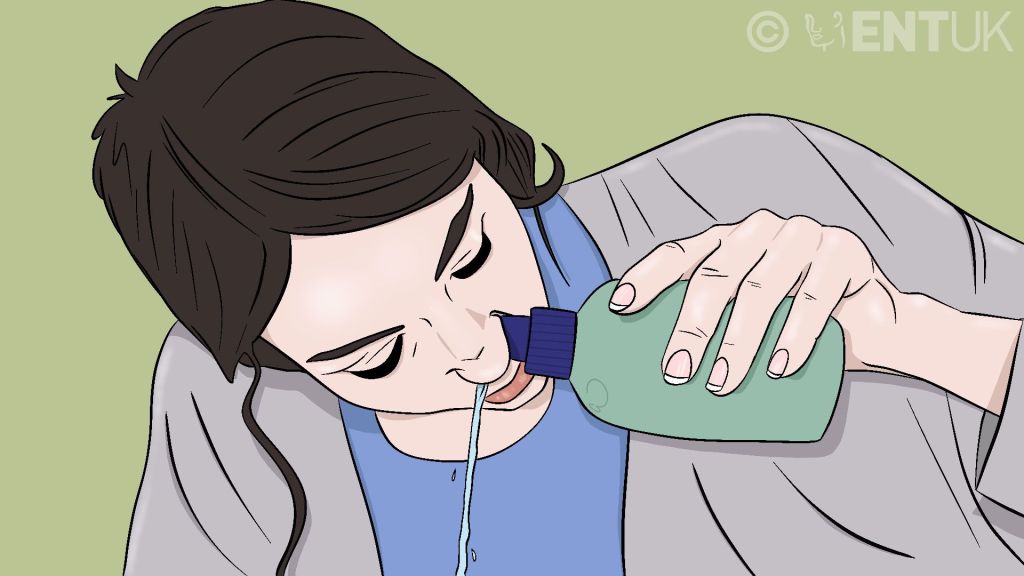
According to the Journal of the American Medical Association (JAMA), high-volume saline irrigation is significantly more effective than simple saline sprays.
– The Mechanism: A dry cough is often triggered by inflammatory “debris”—cytokines and leukotrienes—dripping onto the vocal cords. Large-volume rinses physically flush these chemicals out of the sinus cavities before they can reach the throat.
– The Pro Tip: Ensure you are using a buffered saline solution (sodium chloride + sodium bicarbonate). Pure salt water can actually dry out the membranes further, potentially worsening the cough.
3. The “Aim and Spray” Technique
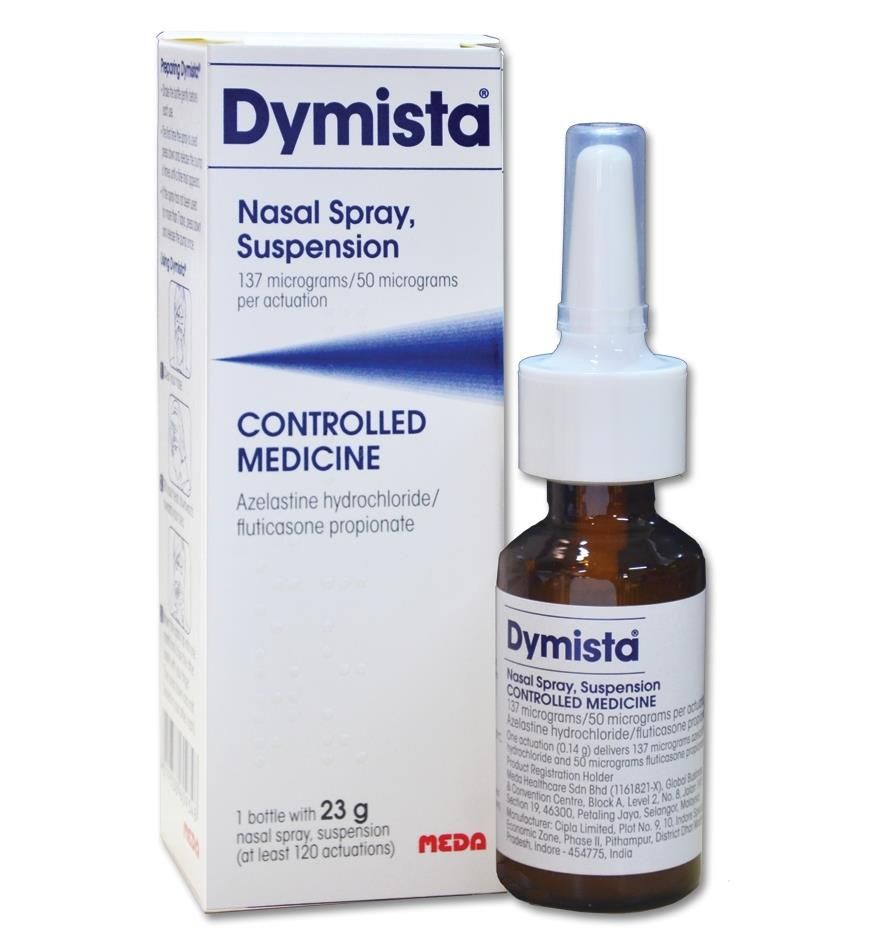
Corticosteroid sprays are the gold standard for CRS, but according to the Journal of Allergy and Clinical Immunology (JACI), most patients use them incorrectly, allowing the medicine to drip down the throat and cause more irritation.
– The Correction: Use the “opposite hand to opposite nostril” technique. Use your right hand to spray into your left nostril, aiming toward the outer corner of your eye. This directs the anti-inflammatory medicine into the sinus tissues where the mucus is produced, rather than letting it pool in the throat.

4. Humidity and Nighttime Protection
The European Respiratory Journal notes that dry air increases the viscosity of mucus. When mucus becomes thick and “tacky,” it sticks to the pharynx, causing a persistent mechanical tickle that no amount of coughing can clear.
– The Fix: Maintain indoor humidity at roughly 40%. If your cough peaks at night, use a wedge pillow to elevate your upper body by 15 to 30 degrees. This prevents the “puddling” of mucus on the vocal cords that triggers the morning coughing jag.

Evidence-Based Strategy Summary











 Dr. Ameen, ENT Specialist in Kuala Lumpur
Leave a comment