


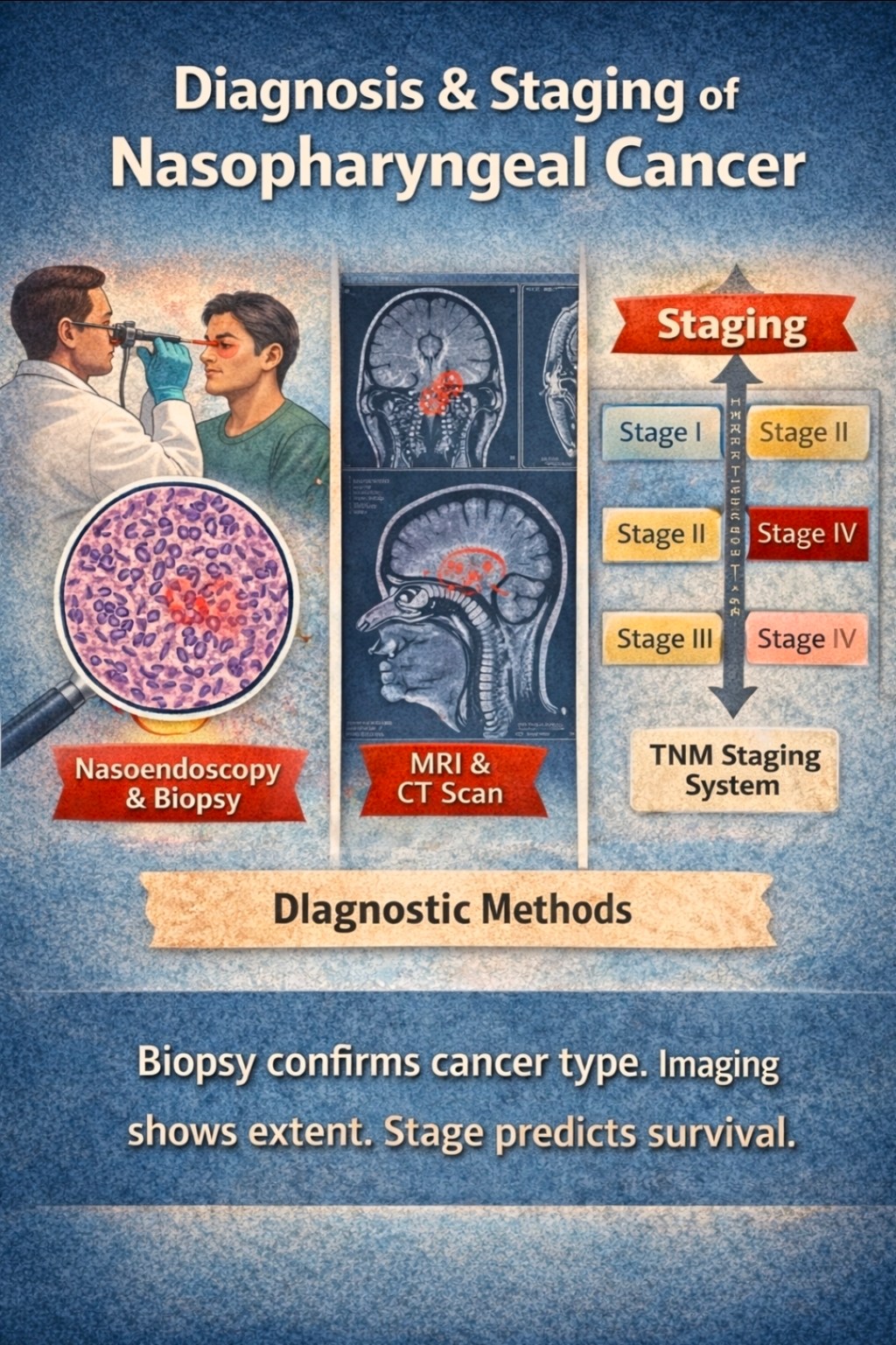
Part 4: Staging and Pathology
Once we have tissue and images, the next step is understanding what kind of cancer and how advanced.
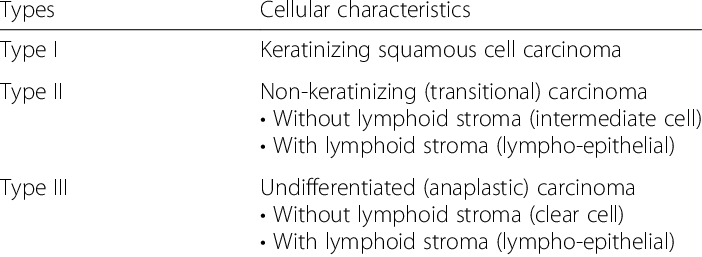
NPC is usually not your average squamous cell carcinoma. In Asia’s endemic NPC, roughly 95% of cases are “non-keratinizing undifferentiated carcinoma”. That’s a mouthful, but it simply means these tumors tend to have a uniform, lymphocyte-rich appearance under the microscope, and crucially they’re driven by EBV.
In contrast, the old-school keratinizing squamous type (the kind of throat cancer smokers get) is rare here and usually EBV-negative. WHO classification (types I–III) helps pathologists tell these apart, but the practical upshot is this: most NPCs in Asia act like an EBV-linked lymphoma under the hood.
As for staging, we use the TNM system (AJCC) like other head-neck cancers. Tumor size (T), nodal spread (N), and distant metastasis (M) are assessed via exam and imaging. Early stages (I–II) mean tumor confined to the nasopharynx (with or without small nodes). Stage III–IV means it’s big, has extensive lymph nodes, or has invaded nearby structures (like the base of skull) or distant organs.
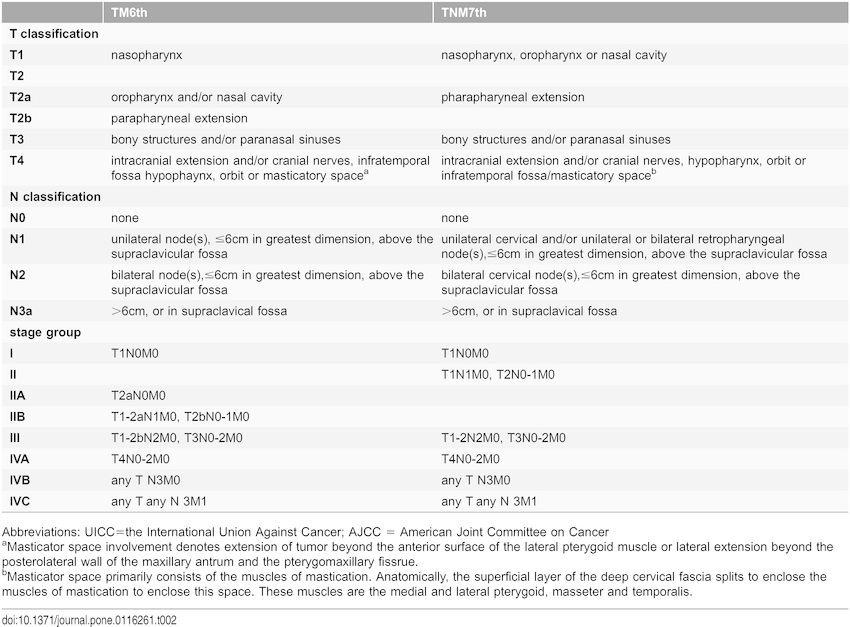
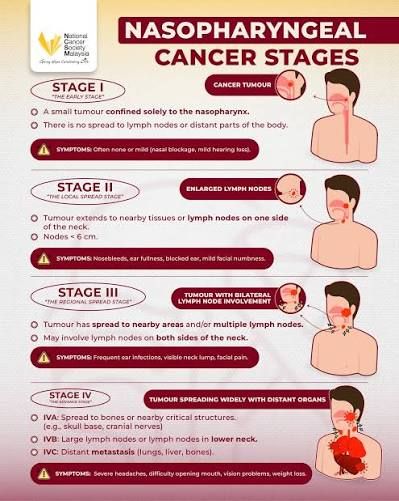
Why does it matter? Because stage predicts survival. In general, Stage I NPC has a very good prognosis (often 5-year survival >90%), but Stage IV is tougher. In fact, by the time most patients come to attention, about 80% are already Stage III–IV. This late presentation takes a toll. Even with modern treatment, 5-year survival for advanced NPC is around **70–80%**. Those numbers might sound grim, but remember they include many very late cases.
In short, catching NPC early makes a world of difference. It’s why the entire world of head-neck oncology pays attention to the stage. Think of staging as sizing up the enemy. A small, hidden tumor is like a cobra in your grass: if you see it early, you can kill it. But an advanced tumor with nodes is like a cobra surrounded by a whole army of its kin – much harder to eliminate. That’s also why so much research now focuses on early detection and screening to nudge the stage lower in Southeast Asia.











 Dr. Ameen, ENT Specialist in Kuala Lumpur
Leave a comment