



Chronic Rhinosinusitis: What Is It? (Definition)
An ENT Specialist’s Guide for Kuala Lumpur & Klang Valley Patients
If you’ve been dealing with a blocked nose that just never seems to clear, facial pressure that feels like a tight helmet, or post-nasal drip that won’t go away despite multiple medications, you’re not alone. Here in Kuala Lumpur and the Klang Valley, these symptoms are incredibly common—and many patients are surprised to learn that they’re not “just sinus.” They may be dealing with a condition called Chronic Rhinosinusitis, often shortened to CRS.
So, what exactly is chronic rhinosinusitis? And why does it matter that it’s called chronic?
Let’s break it down in plain, human language.
What Is Chronic Rhinosinusitis?
Chronic rhinosinusitis (CRS) is a long-term inflammatory condition affecting the nose and paranasal sinuses that lasts for at least 12 consecutive weeks, despite appropriate medical treatment.
Unlike acute sinusitis—which usually follows a flu or cold and settles within days or weeks—CRS is a persistent inflammatory disease, not simply an infection. This distinction is crucial and is strongly emphasized in major international guidelines such as EPOS (European Position Paper on Rhinosinusitis and Nasal Polyps) and leading ENT journals.
In simple terms, CRS is like a smouldering fire in your sinus lining. It may flare up, calm down slightly, then flare up again—but it never fully goes out on its own.
Rhinitis + Sinusitis = Rhinosinusitis
Why the long name?
Because modern ENT research has shown that the nose and sinuses function as one unit. If the nasal lining is inflamed, the sinuses almost always follow. That’s why the correct term is rhinosinusitis, not just sinusitis.
According to current ENT literature:
“Isolated sinus disease without nasal inflammation is uncommon.”
This concept is especially relevant in Malaysia, where environmental triggers like:
- Air pollution
- Haze
- Dust exposure
- High humidity
- Allergens
constantly irritate the nasal lining.
How Long Is “Chronic”?
To qualify as chronic rhinosinusitis, symptoms must:
- Persist for ≥12 weeks, and
- Include at least two key symptoms, one of which must be nasal blockage or nasal discharge
This time-based definition comes from high-quality evidence-based guidelines and helps ENT specialists distinguish CRS from:
- Recurrent acute sinusitis
- Allergic rhinitis alone
- Viral upper respiratory infections
If symptoms last only 1–2 weeks, it’s not CRS.
If they keep coming back over months? That’s when alarm bells ring.
Two Main Types of Chronic Rhinosinusitis
Modern ENT practice recognises two distinct subtypes, because they behave very differently and require different management strategies.
1. Chronic Rhinosinusitis Without Nasal Polyps (CRSsNP)
This form involves:
- Thickened, inflamed sinus lining
- Narrowed sinus drainage pathways
- Facial pain or pressure often more prominent
Patients often describe it as:
“A constant heaviness in the face.”
2. Chronic Rhinosinusitis With Nasal Polyps (CRSwNP)
This subtype is characterised by:
- Soft, grape-like swellings (polyps) inside the nose
- Severe nasal blockage
- Markedly reduced or lost sense of smell
CRSwNP is now recognised as a type 2 inflammatory disease, involving eosinophils and specific immune pathways—an important concept in modern biologic treatments.
Why CRS Is So Common in Kuala Lumpur
Living in Kuala Lumpur and the Klang Valley, we see CRS frequently because of:
- Year-round allergens (dust mites, moulds)
- Urban pollution
- Air-conditioned indoor environments
- High rates of allergic rhinitis
- Delayed specialist referral
Many patients self-treat for months—or years—before seeing an ENT specialist. By then, inflammation has already become entrenched.
Think of CRS like a traffic jam in the sinuses. The longer it’s ignored, the harder it is to clear.
CRS Is Not “Just Sinus”
One of the biggest misconceptions I hear in clinic is:
“Doctor, I just have sinus.”
CRS can significantly affect:
- Sleep quality
- Work productivity
- Concentration
- Mood and mental health
- Sense of smell and taste
Studies published in ENT journals consistently show that CRS reduces quality of life as much as chronic heart or lung disease.
That’s not something to brush off.

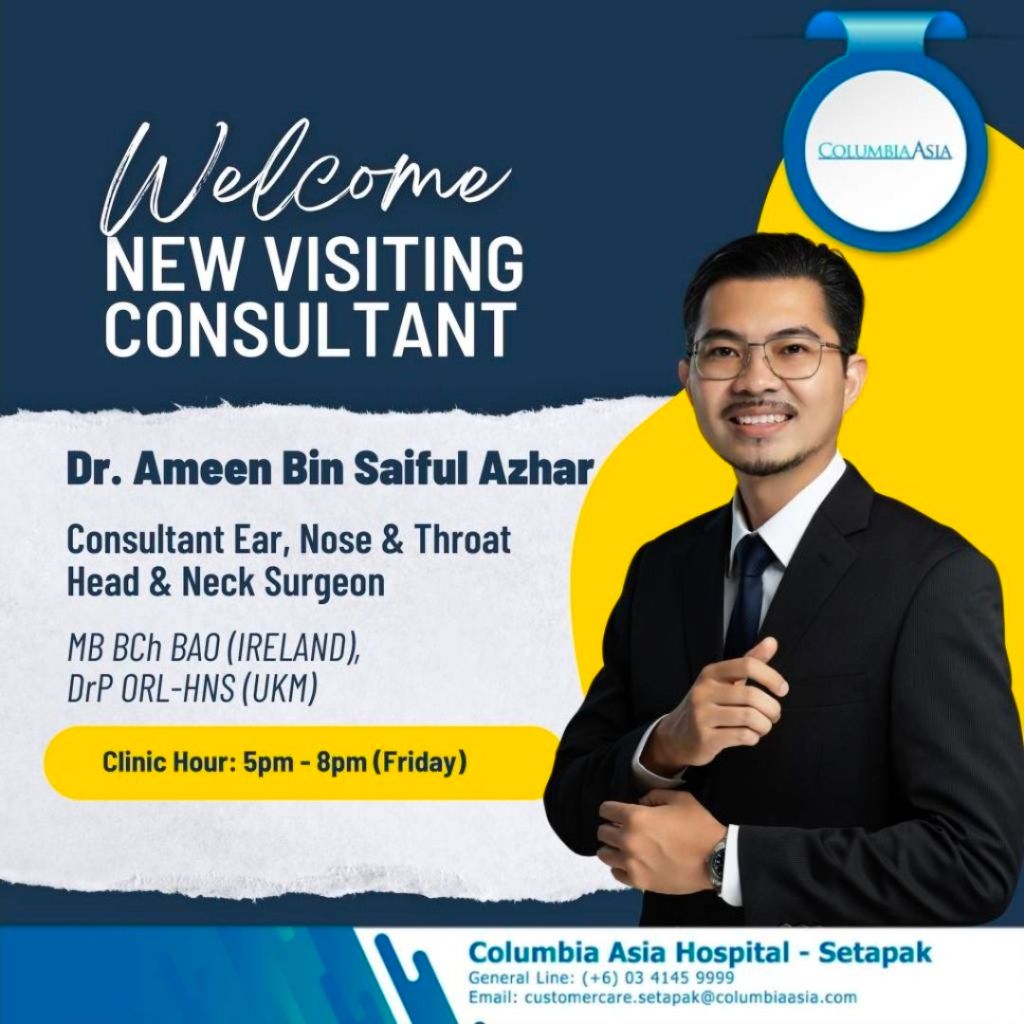
If you are struggling with chronic sinusitis, schedule a consultation with me to begin a targeted treatment plan.






 Dr. Ameen, ENT Specialist in Kuala Lumpur
Leave a comment