


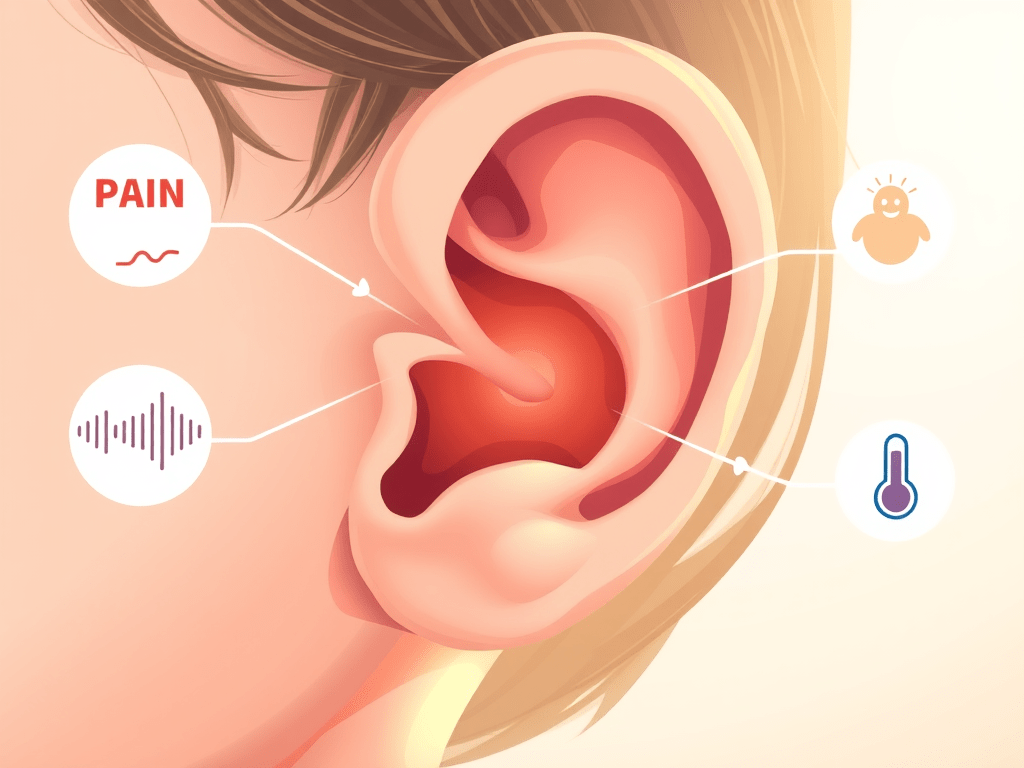
Common Signs and Symptoms of Ear Infection: What Your Ear Is Trying to Tell You
Let’s be honest — the ear doesn’t scream for attention the way the chest or stomach does. Instead, it whispers… until it doesn’t. One moment, it feels a little blocked. The next, there’s pain, pressure, or discharge you can’t ignore.
So what exactly are the common symptoms of an ear infection, and why do they vary so much from person to person?
The short answer: it depends on which part of the ear is infected, your age, and how early (or late) you seek treatment.
As an ENT specialist practising in Kuala Lumpur, I see patients every week who say, “Doctor, I didn’t know this was an ear infection.” Let’s change that.
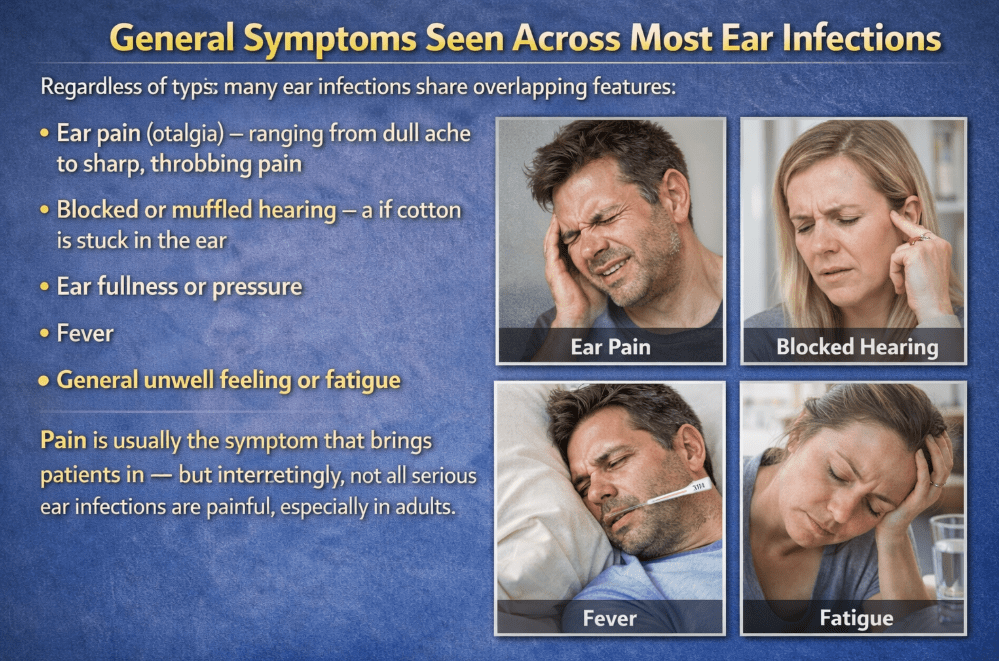
General Symptoms Seen Across Most Ear Infections
Regardless of type, many ear infections share overlapping features:
- Ear pain (otalgia) – ranging from dull ache to sharp, throbbing pain
- Blocked or muffled hearing – as if cotton is stuck in the ear
- Ear fullness or pressure
- Fever, especially in children
- General unwell feeling or fatigue
Pain is usually the symptom that brings patients in — but interestingly, not all serious ear infections are painful, especially in adults.
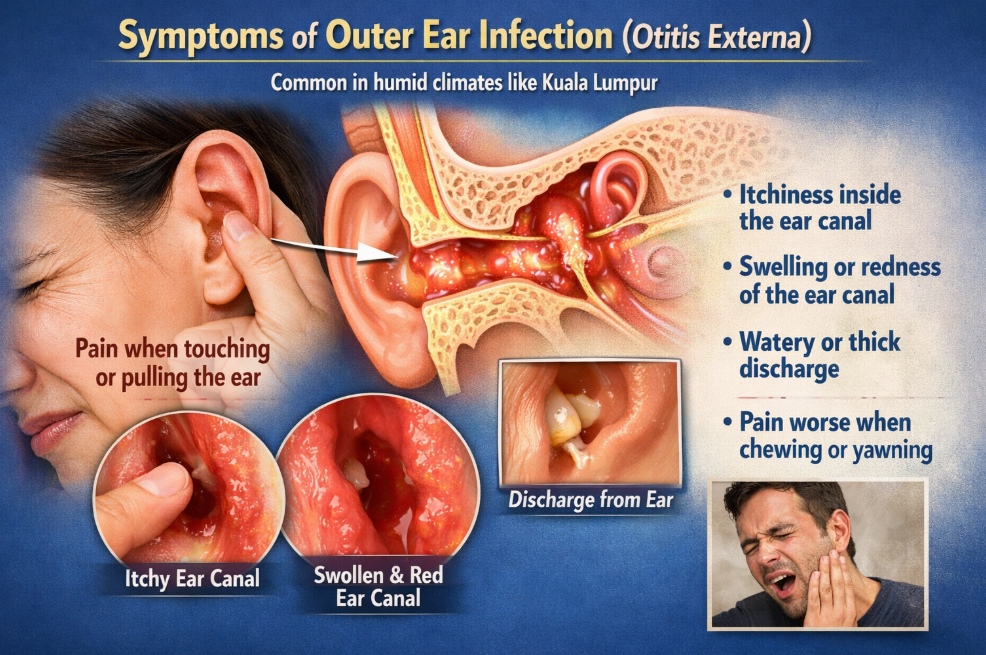
Symptoms of Outer Ear Infection (Otitis Externa)
Outer ear infections are common in humid climates like Kuala Lumpur, and the symptoms are often very localised.
Typical signs include:
- Pain when touching or pulling the ear
- Itchiness inside the ear canal
- Swelling or redness of the ear canal
- Watery or thick discharge
- Pain worsening when chewing or yawning
Patients often tell me, “Doctor, it hurts when I clean my ear.” That’s a classic red flag. Ironically, over-cleaning with cotton buds is one of the biggest causes.
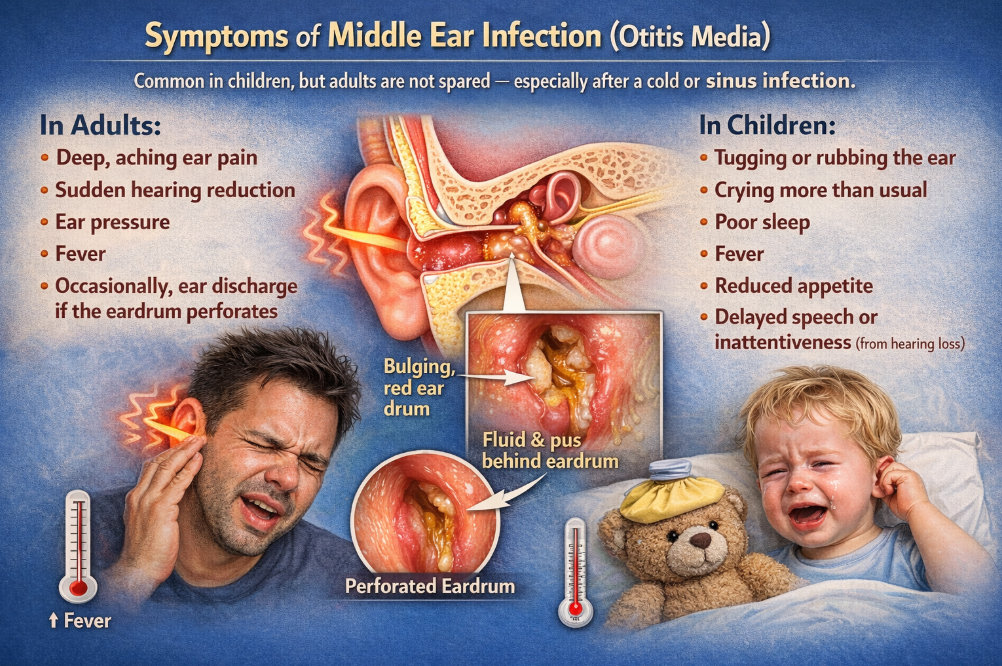
Symptoms of Middle Ear Infection (Otitis Media)
This is the most common ear infection in children, but adults are not spared — especially after a cold or sinus infection.
In adults:
- Deep, aching ear pain
- Sudden hearing reduction
- Ear pressure
- Fever
- Occasionally, ear discharge if the eardrum perforates
In children:
- Tugging or rubbing the ear
- Crying more than usual
- Poor sleep
- Fever
- Reduced appetite
- Delayed speech or inattentiveness (from hearing loss)
Parents often don’t realise that recurrent ear infections can affect hearing and speech development, which is why ENT assessment is crucial.
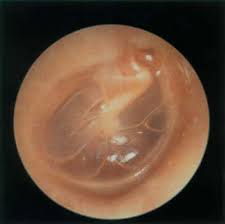
Symptoms of Fluid in the Middle Ear (Otitis Media with Effusion)
This one is sneaky.
There may be no pain at all — just:
- Persistent blocked ear
- Reduced hearing
- A “bubble” or “water” sensation
- Poor concentration in children
This condition is frequently missed because it doesn’t feel dramatic, yet it can cause long-term hearing issues if left untreated.
Symptoms Related to Inner Ear Involvement
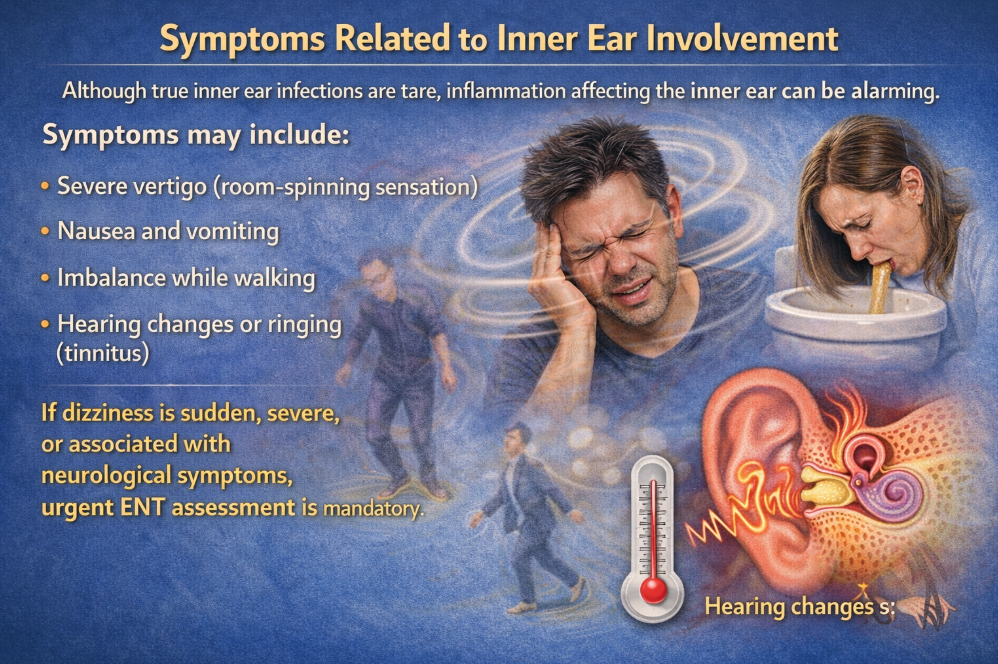
Although true inner ear infections are rare, inflammation affecting the inner ear can be alarming.
Symptoms may include:
- Severe vertigo (room-spinning sensation)
- Nausea and vomiting
- Imbalance while walking
- Hearing changes or ringing (tinnitus)
If dizziness is sudden, severe, or associated with neurological symptoms, urgent ENT assessment is mandatory.
Red Flag Symptoms You Should Never Ignore
Some symptoms warrant immediate medical attention:
- Persistent ear discharge
- Severe ear pain with fever
- Sudden hearing loss
- Facial weakness
- Dizziness with vomiting
- Ear pain in diabetics or immunocompromised patients
These may indicate complicated or aggressive ear infections, which require prompt specialist care.
Why Symptoms Differ from Person to Person
Ear infections don’t read textbooks.
Your symptoms depend on:
- Age
- Ear anatomy
- Immune status
- Previous ear disease
- Timing of treatment
- Environmental factors (humidity, allergies, pollution)
This is why self-diagnosis often fails — and why ENT examination matters.
ENT Specialist Insight
Not all blocked ears are wax.
Not all ear pain is infection.
Not all ear discharge needs antibiotics.
As an ENT specialist, my role is to differentiate symptoms, examine the ear under proper magnification, and treat the cause — not just the discomfort.
👉 If you’re experiencing ear pain, blocked hearing, discharge, or dizziness, don’t wait for it to worsen. Book an ENT consultation with me for an accurate diagnosis and targeted treatment before complications develop.













 Dr. Ameen, ENT Specialist in Kuala Lumpur
Leave a comment