



AI in Ear Care – Reducing Misdiagnosis of Ear Infections in Kuala Lumpur
Ear-related complaints are among the most common reasons patients seek medical care in Kuala Lumpur, especially in children. Symptoms such as ear pain, fever, hearing loss, irritability, or a “blocked ear” often lead to a diagnosis of ear infection. However, despite how common these presentations are, ear infections remain one of the most frequently misdiagnosed ENT conditions, particularly outside specialist settings.
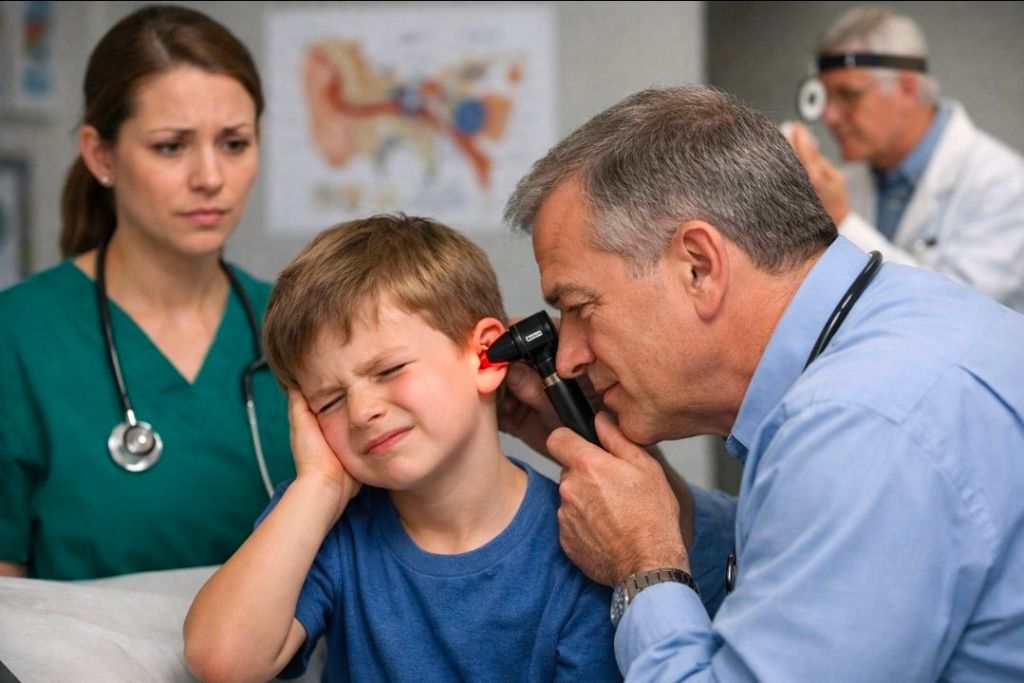
Studies have consistently shown that up to 30–50% of middle ear infections are inaccurately diagnosed in primary care. This is not due to negligence, but rather the inherent difficulty of examining the ear—especially in young children, uncooperative patients, or those with narrow ear canals. In busy urban clinics, where consultation time is limited, these challenges are even more pronounced.
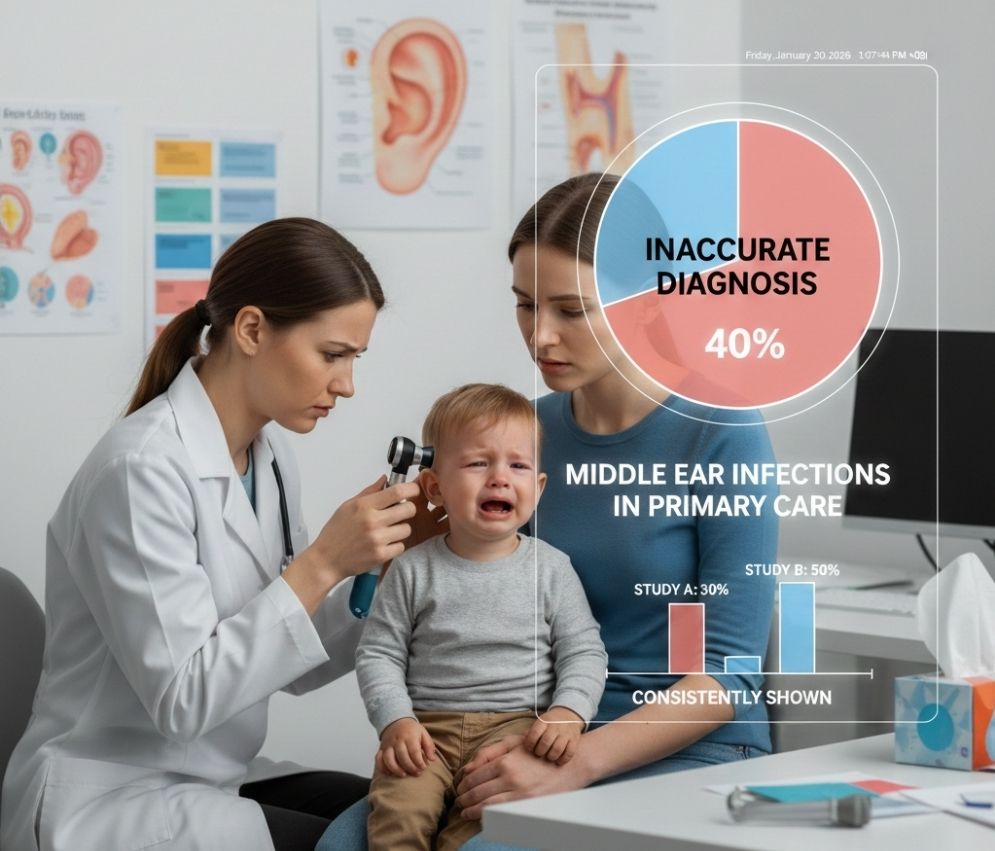
Artificial intelligence (AI) is now addressing this long-standing problem by enhancing how ear examinations are interpreted.
Why Diagnosing Ear Infections Is So Challenging
Middle ear disease is not a single condition. It includes:
- Acute otitis media (AOM) – bacterial or viral infection requiring antibiotics in selected cases
- Otitis media with effusion (OME) – non-infected fluid behind the eardrum, often needing observation only
- Eustachian tube dysfunction – pressure-related symptoms without infection
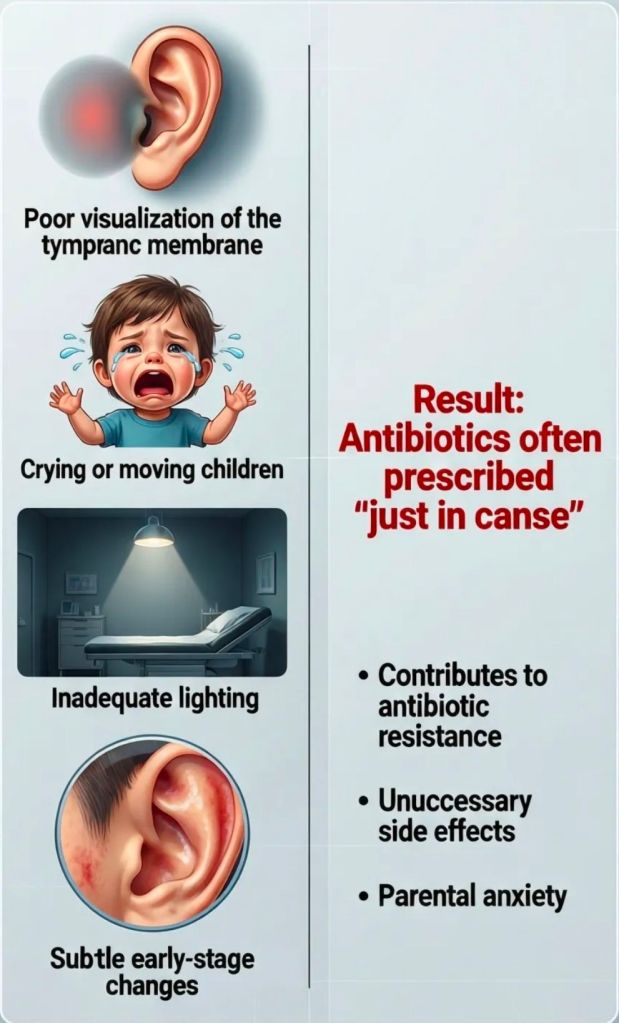
Visually, these conditions can appear similar, especially to non-specialists. Factors that reduce diagnostic accuracy include:
- Poor visualisation of the tympanic membrane
- Crying or moving children
- Inadequate lighting
- Subtle early-stage changes
As a result, antibiotics are often prescribed “just in case,” contributing to antibiotic resistance, unnecessary side effects, and parental anxiety.
How AI Is Transforming Otoscopy
Smartphone-Based AI Otoscopy
Recent advances in AI allow short videos of the eardrum, captured using smartphone otoscope attachments, to be analysed with remarkable precision. These systems evaluate:
- Colour changes of the tympanic membrane
- Loss or distortion of the light reflex
- Bulging or retraction patterns
- Subtle motion abnormalities suggesting fluid or pressure changes
Clinical studies have shown that these AI models can achieve up to 93% diagnostic accuracy, compared to an average of around 65% accuracy among general clinicians.
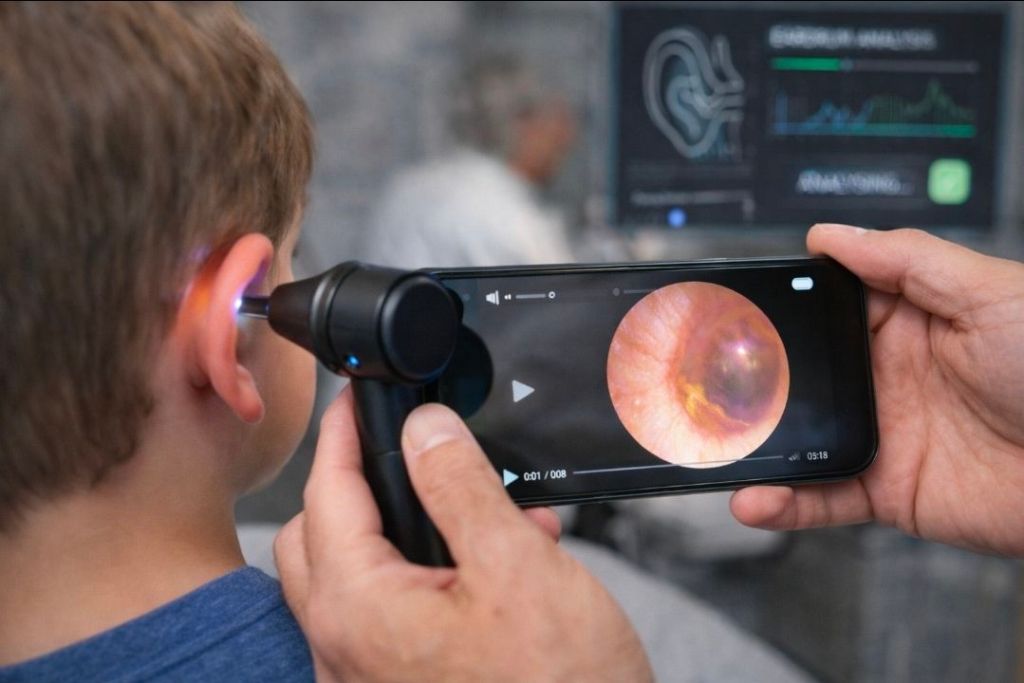
Importantly, the AI does not simply label an ear as “infected” or “normal.” Instead, it provides risk stratification, helping clinicians decide whether:
- Antibiotics are necessary
- Observation is appropriate
- ENT referral is indicated
Impact on Paediatric Ear Care in Kuala Lumpur
Children represent a large proportion of ENT consultations in Kuala Lumpur. Recurrent ear infections are a major cause of:
- School absenteeism
- Speech and language delay
- Parental stress
AI-assisted ear examination is particularly valuable in paediatric care because it helps distinguish between:
- Infected fluid, which may require antibiotics
- Sterile fluid, which usually resolves without medication
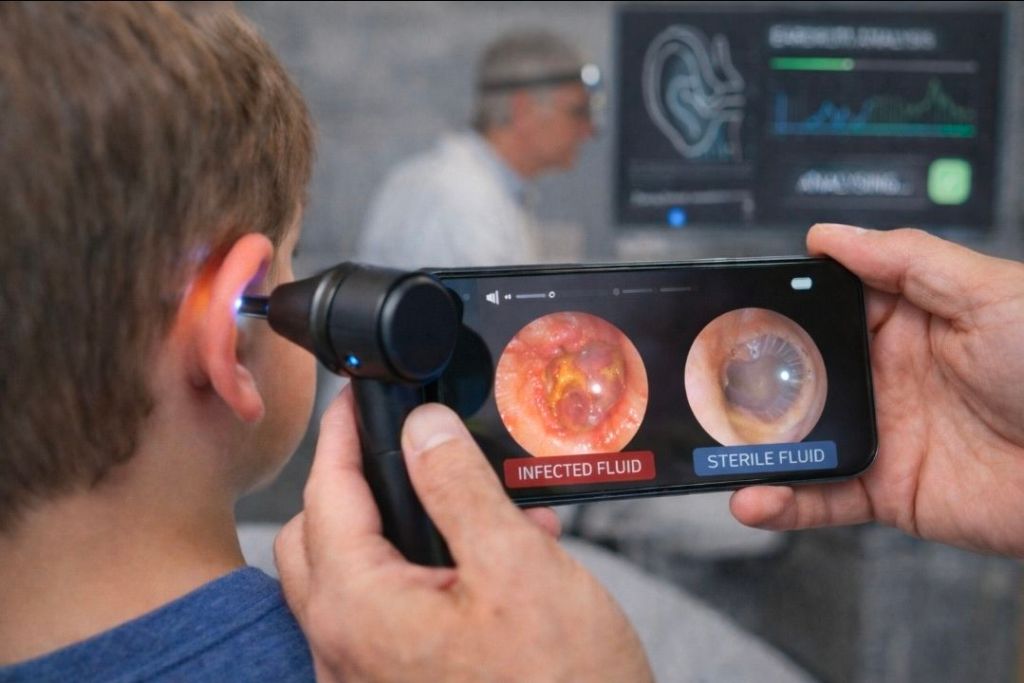
This distinction is critical. Over-treatment of non-infected fluid can lead to:
- Unnecessary antibiotic exposure
- Increased healthcare costs
- Avoidable surgical interventions such as grommet insertion
By improving diagnostic confidence, AI supports evidence-based decision-making, benefiting both children and parents.
Real-World Clinical Application: From Home to Clinic
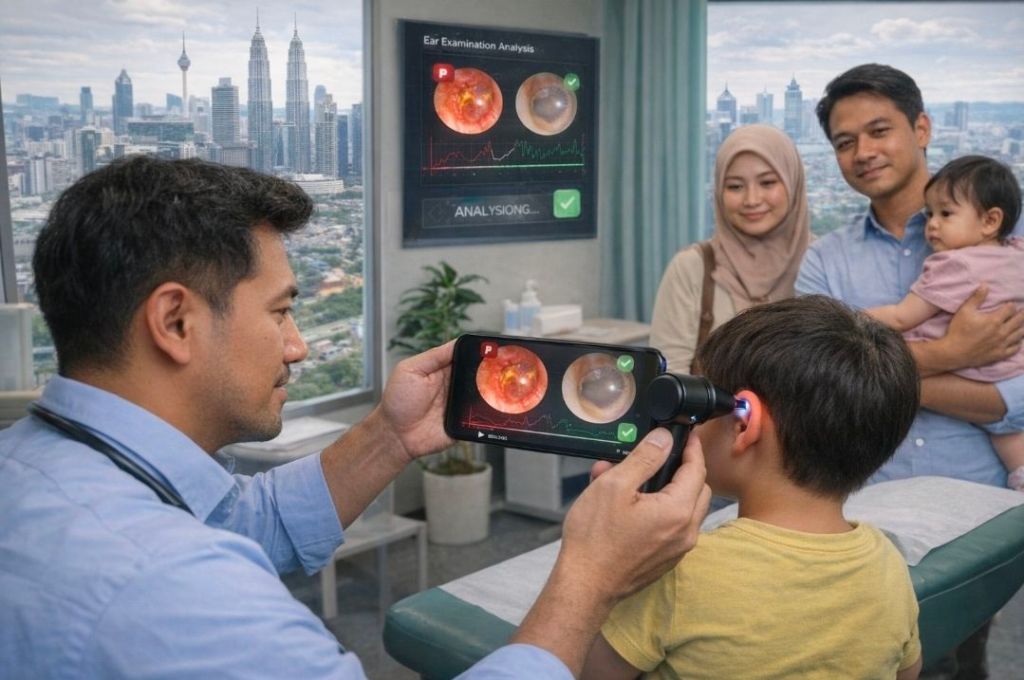
A notable example comes from the University of Pittsburgh Medical Center (UPMC), where researchers developed a smartphone-based AI otoscopy tool. With a simple camera attachment:
- Parents can record ear videos at home
- General practitioners can use the system during consultations
- AI provides real-time diagnostic support
For urban populations like Kuala Lumpur, where access to ENT specialists may involve waiting times, this technology helps ensure timely referral when red flags are detected, while avoiding unnecessary referrals for mild, self-limiting conditions.
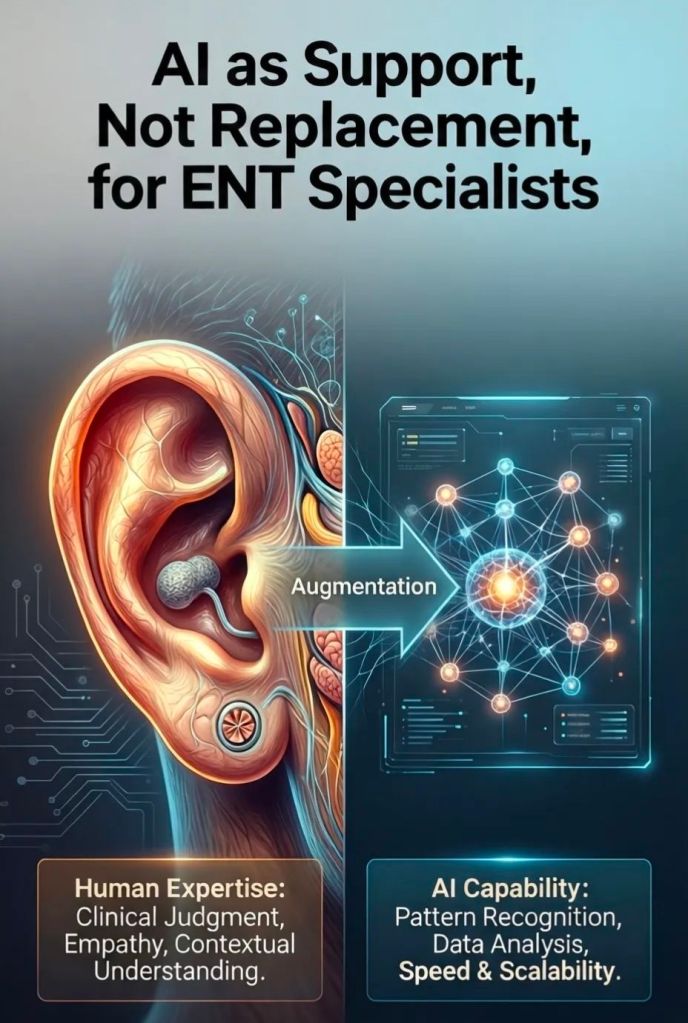
AI as Support, Not Replacement, for ENT Specialists
It is important to emphasise that AI does not replace clinical examination or specialist judgement. ENT specialists still:
- Take detailed clinical histories
- Correlate symptoms with examination findings
- Decide on investigations and treatment
AI serves as a clinical assistant, offering objective pattern recognition that complements human expertise. This is especially valuable in borderline cases or early disease, where subtle findings matter most.
What This Means for Patients and Parents
For patients in Kuala Lumpur, AI-assisted ear care offers:
- More accurate diagnosis
- Reduced unnecessary antibiotic use
- Lower risk of complications
- Greater reassurance for parents
When used responsibly within the expert-in-the-loop model, AI enhances patient safety without removing the human element of care.
Reviewed by Dr Ameen, ENT Specialist, Kuala Lumpur









 Dr. Ameen, ENT Specialist in Kuala Lumpur
Leave a comment