



AI in Throat and Voice Disorders – Vocal Biomarkers and Early Detection of Laryngeal Cancer in Kuala Lumpur
Voice and throat problems are among the most frequent reasons for ENT referral in Kuala Lumpur, particularly among adults whose professions depend heavily on vocal use. Teachers, lecturers, call-centre workers, singers, lawyers, and business professionals often present with hoarseness, voice fatigue, throat discomfort, or a sensation of something “stuck” in the throat. While many of these symptoms are benign, a small but significant proportion may represent early laryngeal disease, including cancer.

The challenge for clinicians has always been early differentiation. Mild hoarseness may be caused by voice overuse, reflux, infection, or allergies. Early laryngeal cancer, however, may present with very similar symptoms and minimal visible changes on examination. Artificial intelligence (AI) is now emerging as a powerful tool to support earlier and more accurate evaluation of throat and voice disorders.
Why Early Throat Cancer Is Difficult to Detect
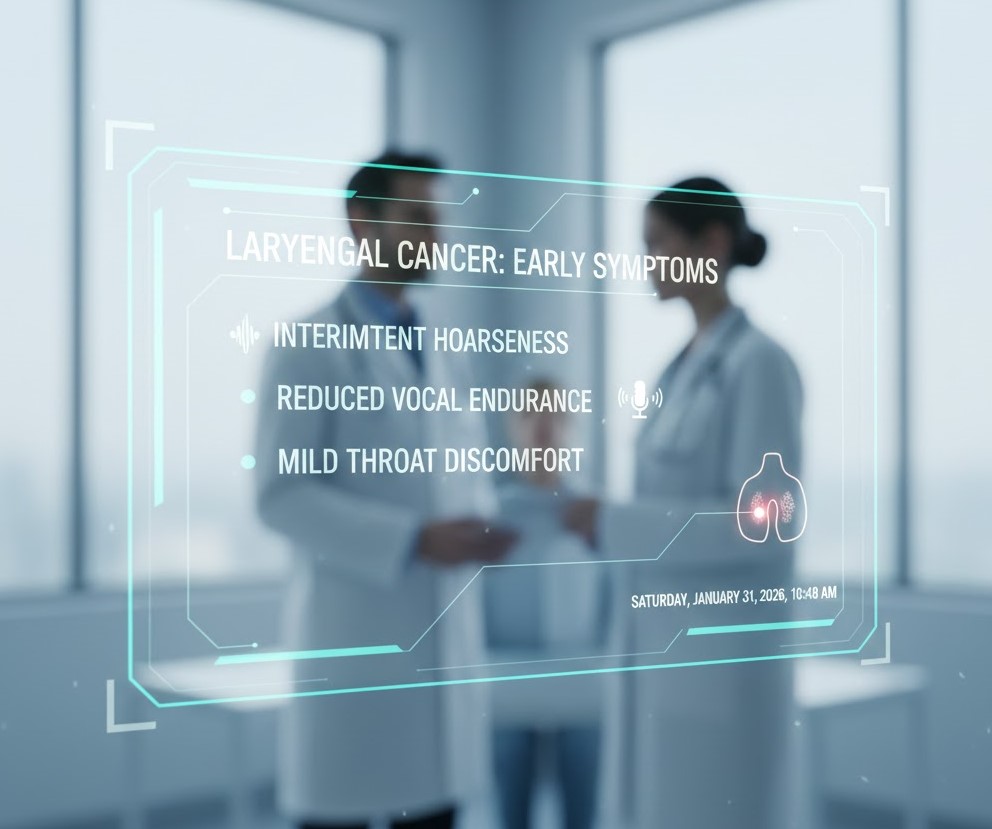
Laryngeal (voice box) cancer often begins subtly. In its earliest stages, patients may experience:
- Intermittent hoarseness
- Reduced vocal endurance
- Mild throat discomfort
- Voice breaks or roughness
These symptoms are common in non-cancerous conditions, leading to delayed referral or reassurance without further investigation. In busy urban healthcare settings such as Kuala Lumpur, patients may also delay seeking specialist care, assuming symptoms are work-related or temporary.
Traditional diagnosis relies on laryngoscopy, where a camera is used to visualise the vocal cords. While highly effective, laryngoscopy still depends on:
- Operator experience
- Patient cooperation
- Visibility of structural changes
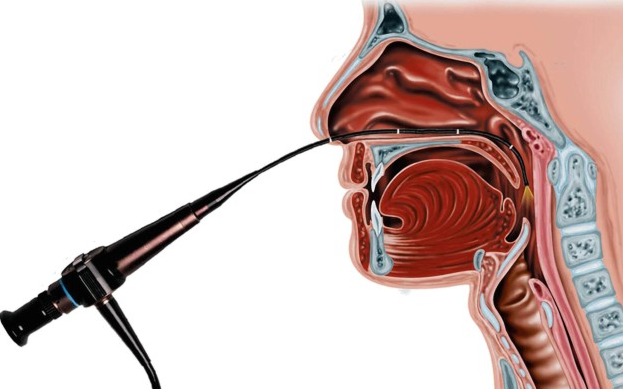
Very early disease may not be visually obvious, even to experienced ENT specialists.
Voice as a Diagnostic Biomarker
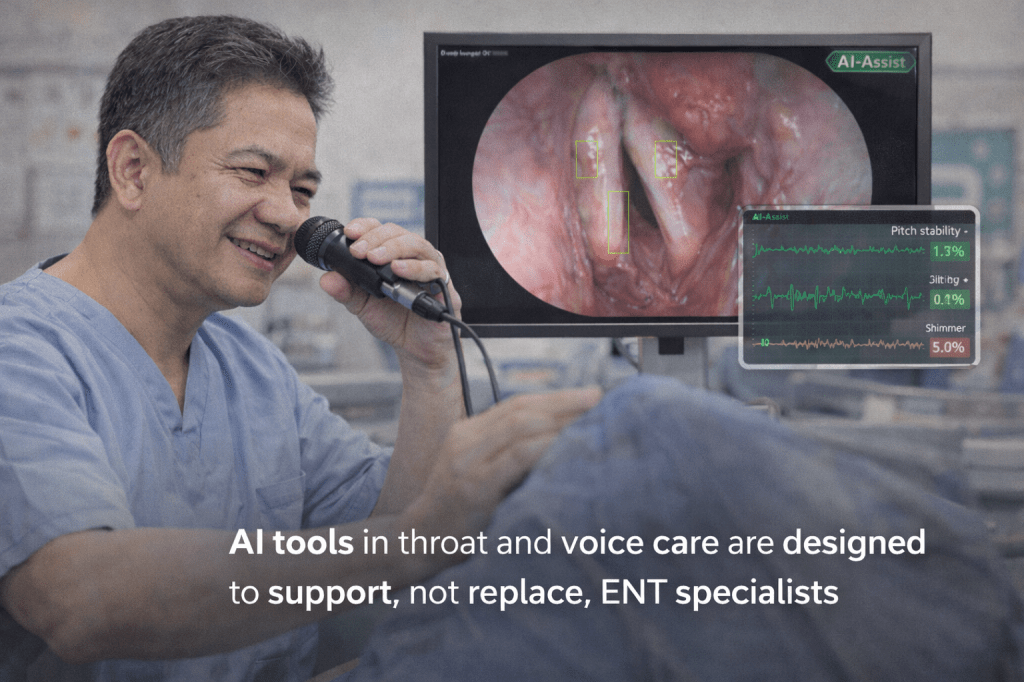
Recent advances in AI have introduced the concept of voice as a biomarker. Instead of focusing solely on visible lesions, AI analyses how the voice behaves acoustically.
Researchers from Oregon Health & Science University (2025) demonstrated that AI can detect differences between healthy individuals and those with vocal fold lesions, including cancer, by analysing:
- Pitch stability
- Jitter (frequency variation)
- Shimmer (amplitude variation)
- Harmonic-to-noise ratio
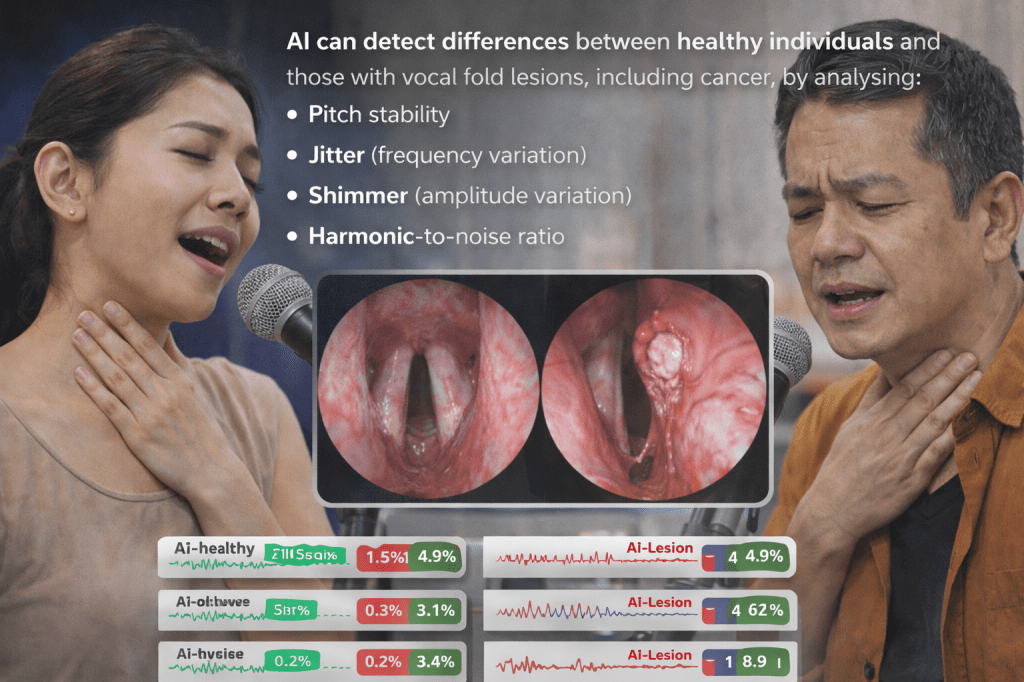
Remarkably, this analysis can be performed using a short, five-minute voice recording, without invasive procedures.
How Accurate Is AI in Detecting Throat Disease?
Large systematic reviews published in 2025 showed that:
- AI-assisted voice analysis achieves a pooled accuracy of approximately 86% in detecting laryngeal lesions
- AI systems used during laryngoscopy reach up to 94% accuracy in distinguishing benign from malignant lesions
- Advanced convolutional neural network (CNN) models demonstrate 85% sensitivity and 90% specificity for laryngeal cancer detection
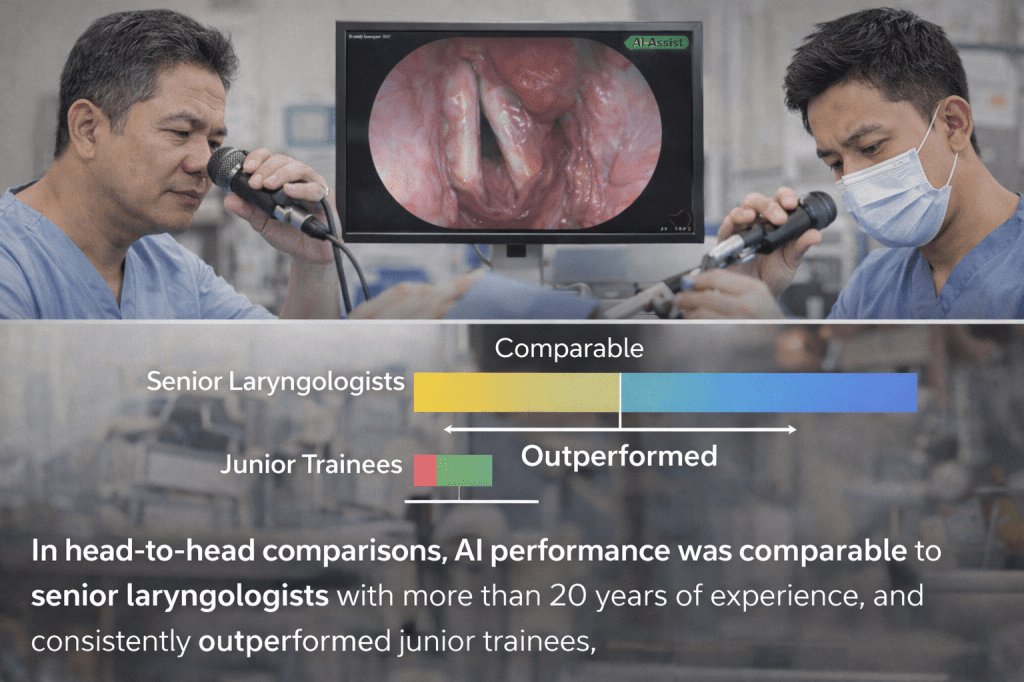
In head-to-head comparisons, AI performance was comparable to senior laryngologists with more than 20 years of experience, and consistently outperformed junior trainees.
Beyond Detection: Predicting Disease Behaviour
One of the most significant advances is AI’s ability to assist with risk stratification, not just detection. Modern AI models can estimate:
- Likelihood of lymph node involvement
- Tumour aggressiveness
- Risk of disease progression
This information helps ENT specialists determine whether a patient may benefit from:
- Conservative treatment
- Single-modality therapy
- Combined chemo-radiotherapy
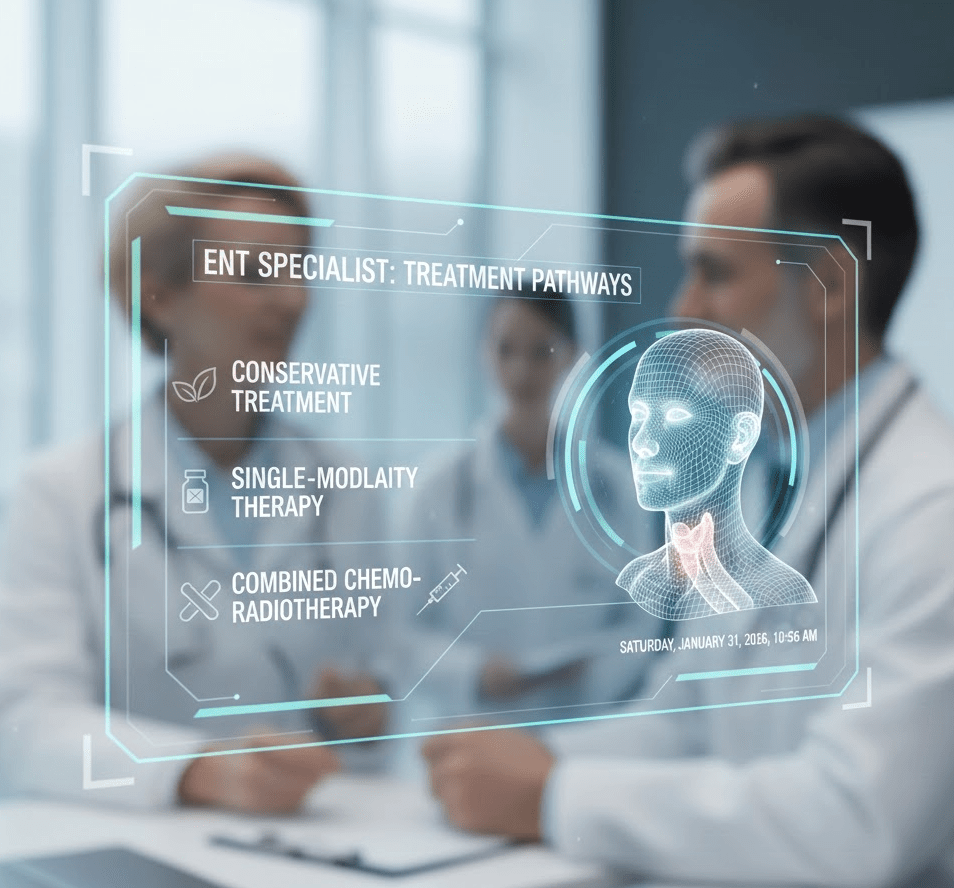
For selected low-risk patients, AI-assisted decision-making supports treatment de-escalation, reducing long-term complications such as voice damage and swallowing difficulties.
Implications for Patients in Kuala Lumpur
For patients, especially those with persistent hoarseness lasting more than two to three weeks, AI-assisted voice analysis offers:
- Earlier identification of high-risk patterns
- More objective assessment
- Timely referral for laryngoscopy and biopsy when needed
Importantly, AI does not replace physical examination or biopsy. Instead, it helps prioritise urgency, ensuring that high-risk patients are seen sooner.
Maintaining Safety: The Expert-in-the-Loop Model
AI tools in throat and voice care are designed to support, not replace, ENT specialists. The expert-in-the-loop model ensures that:
- AI provides analysis and probability estimates
- ENT specialists interpret findings in clinical context
- Final decisions remain human-led
This approach preserves patient safety, trust, and personalised care.
A New Standard in Voice Assessment
As AI continues to mature, voice analysis may become a routine adjunct in ENT clinics, particularly in high-volume urban centres like Kuala Lumpur. Used responsibly, it enhances early detection, reduces missed diagnoses, and supports better long-term outcomes.
Reviewed by Dr Ameen, ENT Specialist, Kuala Lumpur




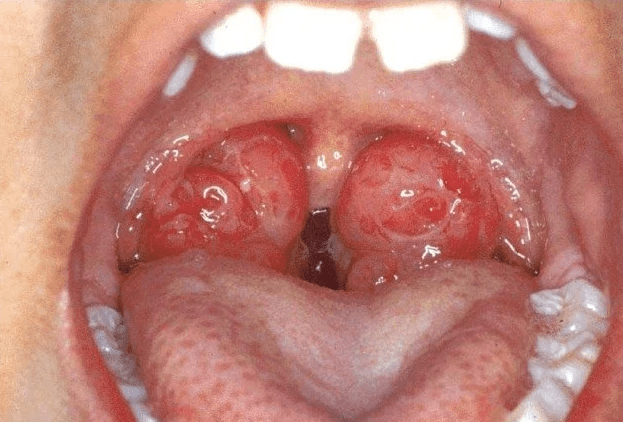





 Dr. Ameen, ENT Specialist in Kuala Lumpur
Leave a comment