




Many patients say:
“Doctor, my left side is always blocked.”
Then a few hours later, it switches.
Do you know why that happens?
Because your nose has a built-in rhythm called the nasal cycle.
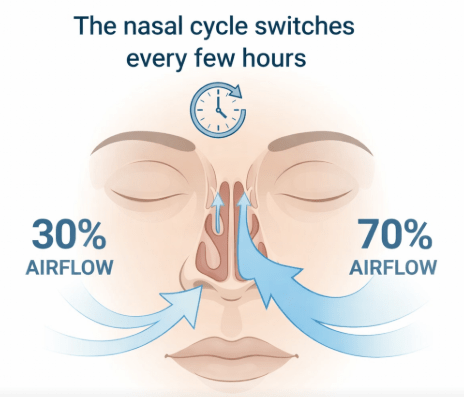
What is the nasal cycle?
Inside the nose, soft tissue (turbinates) naturally swells and decongests in a cycle. One side becomes slightly more open while the other side becomes slightly less open. Then it alternates.
This is normal physiology. Most people don’t notice it until:
- They have allergies or rhinitis
- They lie down
- They get a cold
- The air is dry (AC exposure)
Your own rhinitis content already notes symptoms worsen at night and affect sleep—this ties perfectly into the nasal-cycle explanation.
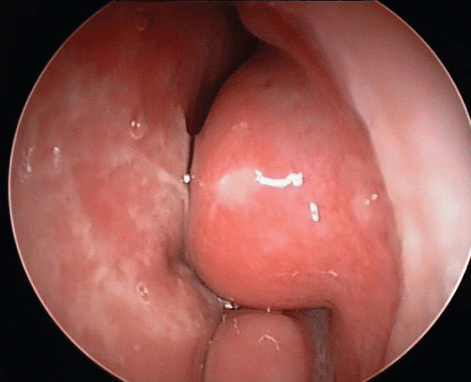
When it becomes NOT normal
See an ENT if the blockage is:
- Always on one side, consistently, for weeks
- Associated with recurrent nosebleeds
- Associated with facial swelling, severe pain, or reduced smell
- Getting progressively worse

Common reasons people notice it more in Kuala Lumpur
- Allergic rhinitis (“resdung” symptoms)
- Air-conditioned environments (dry mucosa)
- Viral URTI
- Deviated septum (but many have it without symptoms)
What helps
- Saline irrigation
- Treat rhinitis properly (not just repeated decongestant sprays)
- Sleep with head slightly elevated if congestion worsens supine

Key takeaway
Feeling one nostril more blocked is often normal.
Feeling one nostril blocked all the time is not.
FAQs
- Is it normal if it alternates? Yes. That pattern strongly suggests nasal cycle.
- Does it mean I have sinus? Not necessarily.
- Will a deviated septum always cause blockage? No. Many people compensate well.
- Can rhinitis make the cycle feel worse? Yes, swelling amplifies it.
- When should I worry? Persistent one-sided blockage, bleeding, or worsening symptoms.
Article reviewed by Dr Ameen, ENT Specialist KL








 Dr. Ameen, ENT Specialist in Kuala Lumpur
Leave a comment