



Treatment and Management Options
Let’s address the big question.
How are ear infections and hearing loss actually treated?
Many people assume the answer is simple: antibiotics or hearing aids. But modern ENT treatment is far more precise. Management depends entirely on the type, cause, and severity.
In Kuala Lumpur, I often see patients who received repeated antibiotics without proper diagnosis. Unfortunately, that approach sometimes worsens the condition.
Let’s break this down clearly.
Treatment for Ear Infections
1. Observation and Symptomatic Care
Not all ear infections need antibiotics.
Many middle ear infections are viral. In these cases, pain control and monitoring are sufficient. Evidence from leading otology journals supports watchful waiting in selected patients.
Pain relief medications reduce inflammation and improve comfort. Nasal treatment may help if Eustachian tube dysfunction is present.
Close follow-up is essential. If symptoms worsen, we escalate treatment.
2. Targeted Antibiotics
When bacterial infection is confirmed, antibiotics are prescribed carefully.
The choice depends on:
- Age
- Severity
- Previous antibiotic exposure
- Allergy history
Repeated unnecessary antibiotics increase resistance. Therefore, precision matters.
In outer ear infections, antibiotic ear drops are often more effective than oral medication. In fungal infections, antifungal drops are required instead.
Using the wrong drop delays recovery.

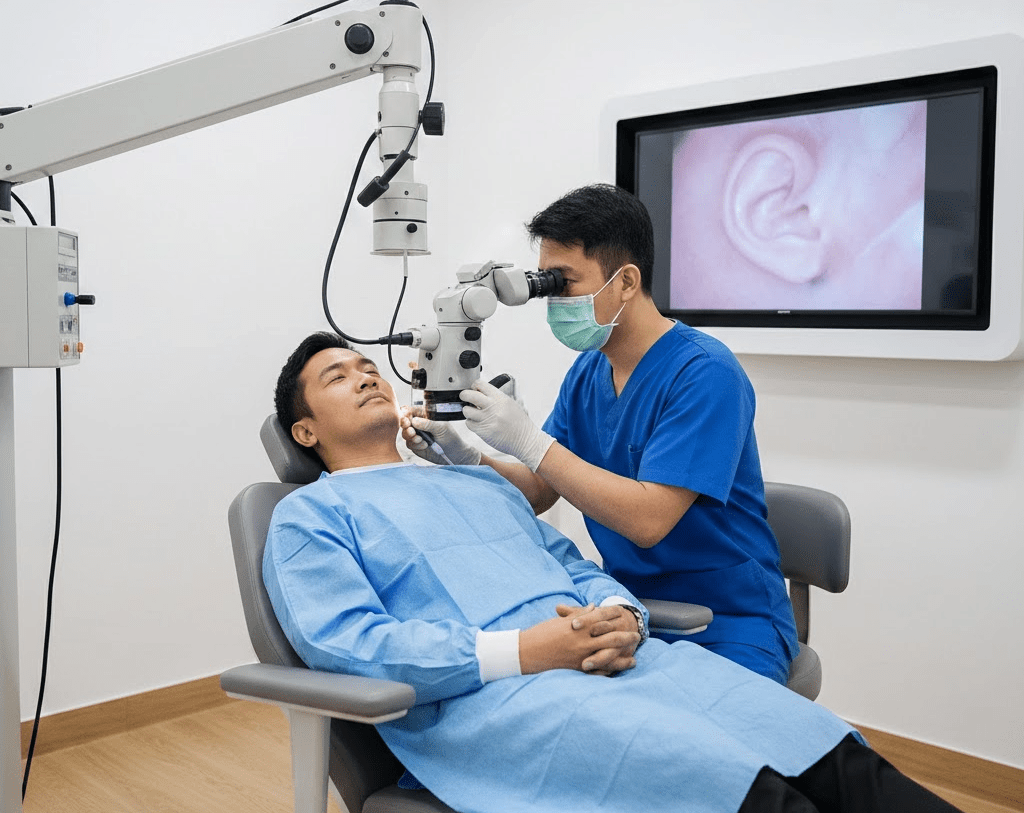
3. Ear Cleaning (Microsuction)
For outer ear infections, debris removal is crucial.
Microsuction under magnification allows safe cleaning of infected material. This improves medication penetration and accelerates healing.
In Kuala Lumpur’s humid climate, fungal debris is not uncommon. Cleaning makes a significant difference.
4. Management of Chronic or Recurrent Infections
Recurrent infections require deeper evaluation.
Treatment may involve:
- Addressing allergies
- Treating sinus disease
- Repairing eardrum perforations
- Surgical intervention in selected cases
Chronic ear disease such as cholesteatoma requires surgery to prevent bone damage and hearing loss.
Early detection simplifies management.
Treatment for Hearing Loss
Hearing loss treatment depends on type.
1. Conductive Hearing Loss
If fluid is present behind the eardrum, treatment may include:
- Medication
- Monitoring
- Minor surgical procedures such as grommet insertion
Grommets ventilate the middle ear and restore hearing in suitable cases.
If wax is the cause, safe removal restores hearing immediately.

2. Sudden Sensorineural Hearing Loss
This is an emergency.
Treatment often involves corticosteroids. Early intervention significantly improves recovery rates.
Delay reduces effectiveness. This is why sudden hearing loss must never be ignored.
3. Long-Term Sensorineural Hearing Loss
When inner ear damage is permanent, rehabilitation becomes the focus.
Options include:
- Hearing aids
- Assistive listening devices
- Cochlear implants in severe cases
Modern hearing aids are discreet and technologically advanced. They improve clarity, not just volume.
Counselling and realistic expectation setting are equally important.

Lifestyle and Preventive Strategies
Treatment does not end in the clinic.
Patients must:
- Avoid cotton buds
- Protect ears from loud noise
- Manage allergies
- Keep ears dry after swimming
- Control chronic illnesses such as diabetes
These small steps prevent recurrence.


Why Personalised Treatment Matters
No two ears are the same.
The same symptom may have different causes in different patients. Evidence-based ENT care focuses on individualised treatment rather than routine prescriptions.
In Kuala Lumpur, environmental factors add complexity. Therefore, comprehensive evaluation ensures accurate management.
The goal is simple: preserve hearing and prevent recurrence.

If you are struggling with ear infections or hearing loss in Kuala Lumpur, personalised ENT treatment can restore comfort, protect your hearing, and prevent long-term complications.
References
This article is written based on current evidence and clinical practice standards from leading ENT journals, including The Laryngoscope, JAMA Otolaryngology–Head & Neck Surgery, Otolaryngology–Head and Neck Surgery, Otology & Neurotology, Head & Neck, Clinical Otolaryngology, and European Archives of Oto-Rhino-Laryngology.
Reviewed by Dr Ameen, ENT Specialist, Kuala Lumpur








 Dr. Ameen, ENT Specialist in Kuala Lumpur
Leave a comment