




Dizziness after ear problems is common, and worrying
Many patients say:
“My ear infection is better, but I still feel dizzy.”
Do you know why ear infections can affect balance?
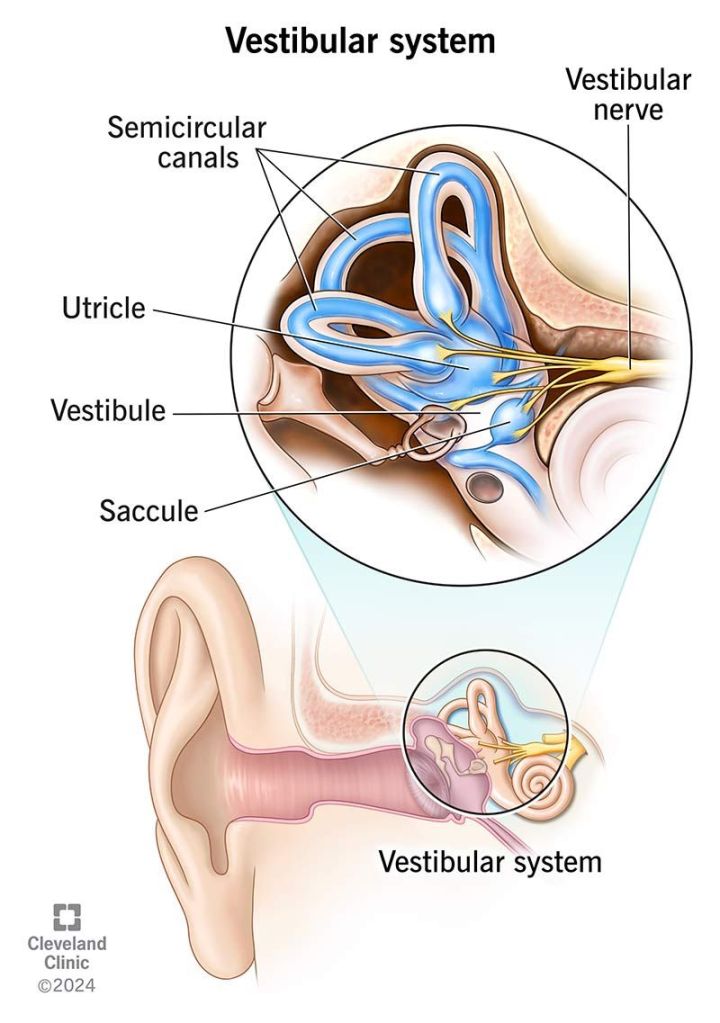
Your ear is also your balance organ
Inside the inner ear are structures responsible for:
1) Hearing
2) Balance
3) Head position awareness
When infection or inflammation affects these areas, balance can be disturbed.
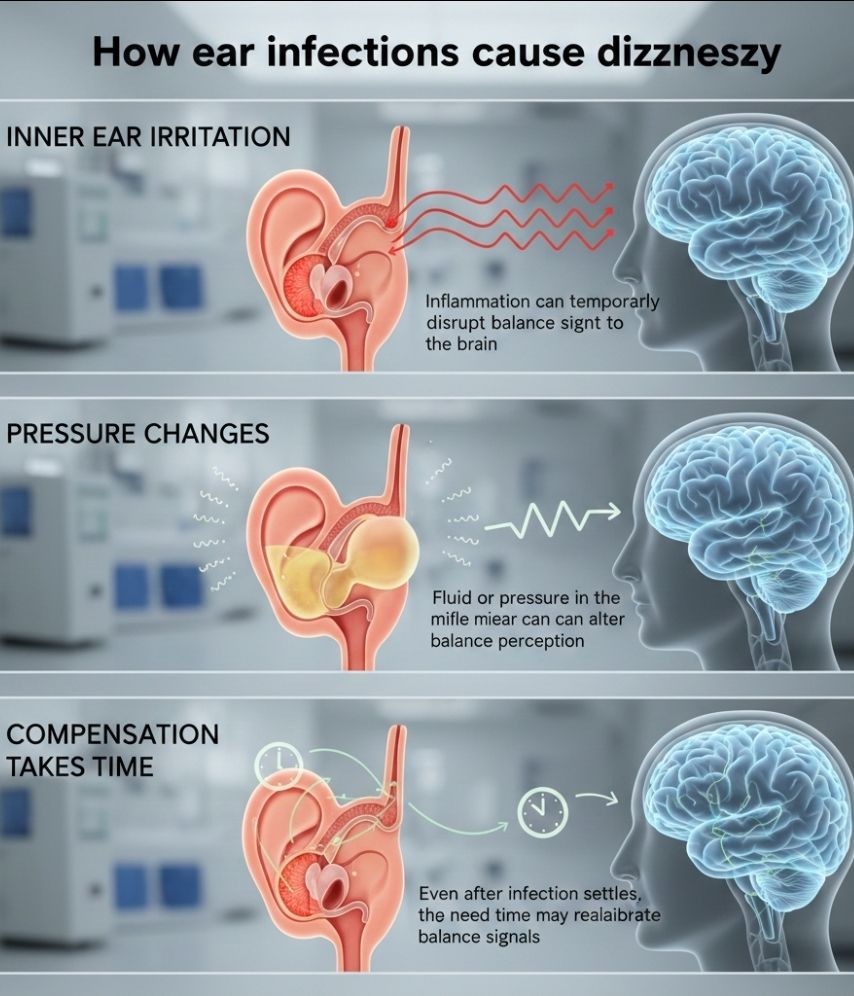
How ear infections cause dizziness
1) Inner ear irritation
Inflammation can temporarily disrupt balance signals sent to the brain.
2) Pressure changes
Fluid or pressure in the middle ear can alter balance perception.
3) Compensation takes time
Even after infection settles, the brain may need time to recalibrate balance signals.
Common symptoms patients notice
1) Spinning sensation (vertigo)
2) Light-headedness
3) Unsteadiness when walking
4) Nausea or vomiting
5) Worse symptoms with head movement

When dizziness needs urgent attention
Seek immediate medical care if dizziness is associated with:
1) New hearing loss
2) Severe headache
3) Weakness or numbness
4) Difficulty speaking
5) Persistent vomiting
These are not typical ear-related dizziness.

What usually helps recovery

Key takeaway
* Ear infections can temporarily disturb balance.
* Persistent or worsening dizziness should always be evaluated.
Frequently Asked Questions
1) Is dizziness normal after an ear infection?
– Yes, especially if the inner ear was irritated.
2) How long does recovery take?
— Many improve within days to weeks.
3) Does dizziness mean permanent damage?
– Usually no. Most cases are reversible.
4) Can medication help?
– Short-term medication may reduce symptoms but does not speed nerve recovery.
5) Should I see an ENT specialist?
– Yes, if dizziness persists or recurs.











 Dr. Ameen, ENT Specialist in Kuala Lumpur
Leave a comment