


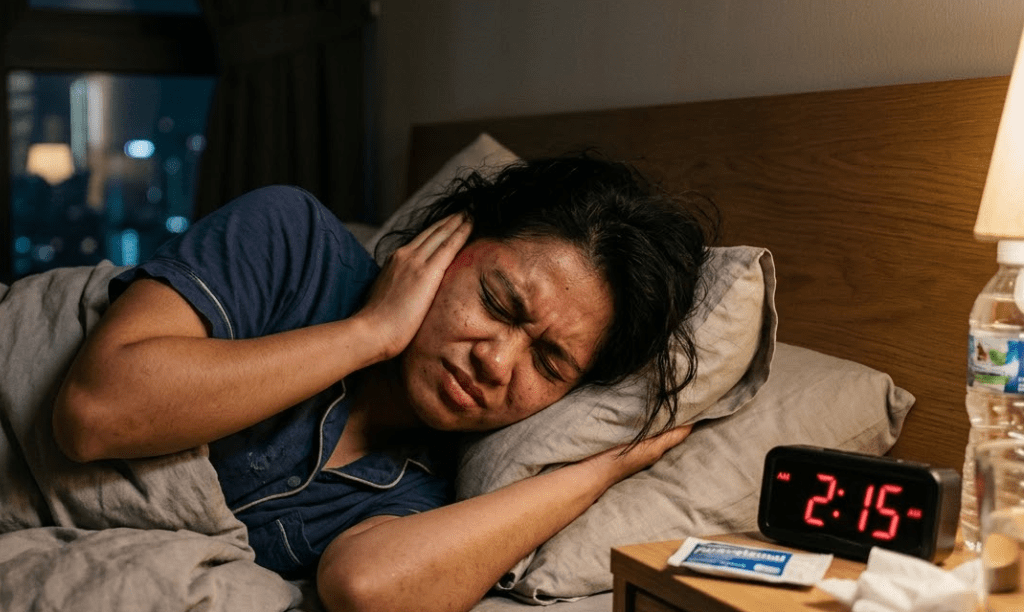
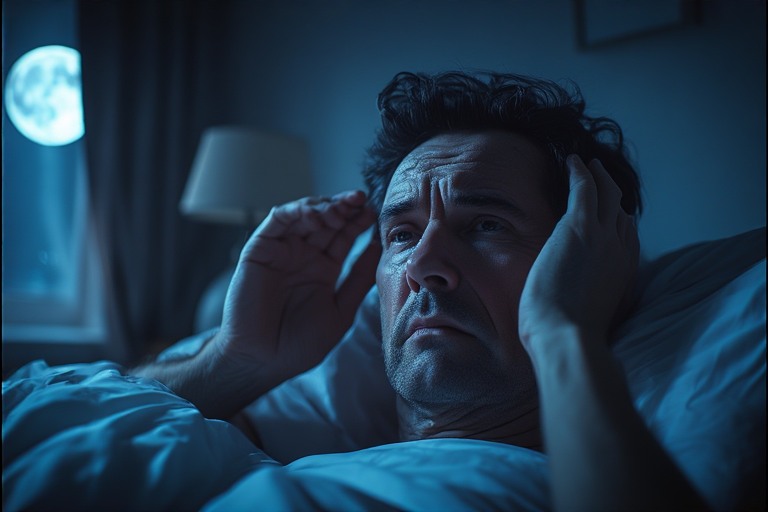
Ear pain can feel mild during the day. Then night arrives, and suddenly the pain seems stronger. Many patients ask the same question. Why does ear pain worsen at night?
This is a common concern in ear, nose and throat clinics. It affects both children and adults. Research from leading otology and ENT journals explains several biological reasons behind this pattern.
If you live in Kuala Lumpur and struggle with nighttime ear pain, understanding the cause can help you seek the right treatment early.
Why Nighttime Ear Pain Feels Worse
Ear pain that intensifies at night is not just in your imagination. Several physiological changes happen when your body prepares for sleep.
Doctors frequently observe this in conditions such as:
- Acute otitis media
- Otitis externa
- Eustachian tube dysfunction (ETD)
- Sinus related ear pressure
Studies in major otology journals describe multiple mechanisms behind this phenomenon.
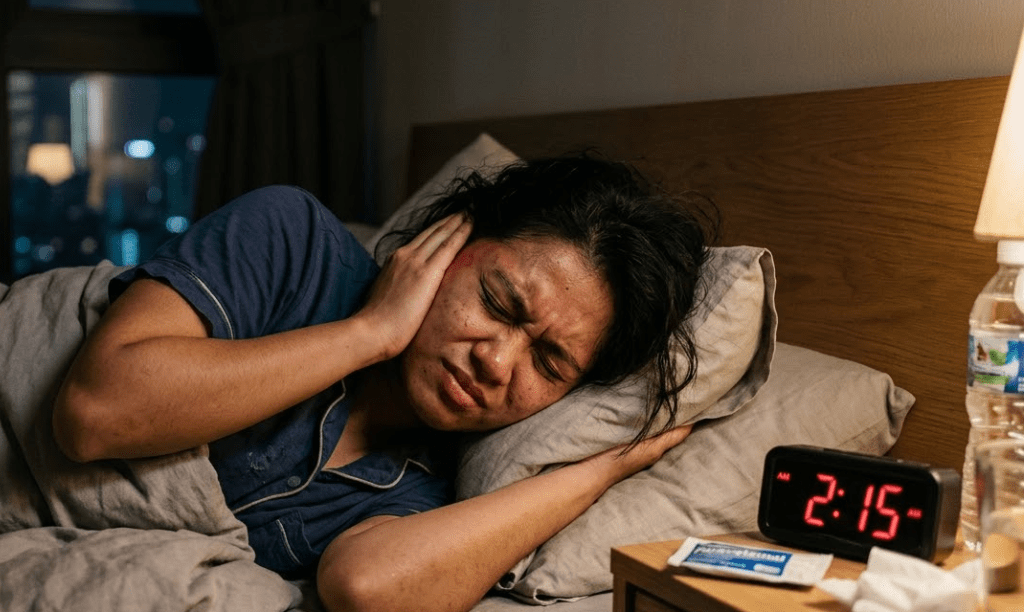
1) Lying Down Increases Pressure in the Ear
During the day, most people remain upright. Gravity helps fluid drain from the middle ear and surrounding tissues.
At night, however, you lie flat.
When you lie down:
- Fluid can accumulate in the middle ear
- Blood flow increases to the head
- Pressure inside the ear may rise
This pressure stimulates pain sensitive nerves in the ear canal and middle ear. As a result, discomfort becomes more noticeable.
Children with middle ear infections often wake up crying at night for this exact reason.
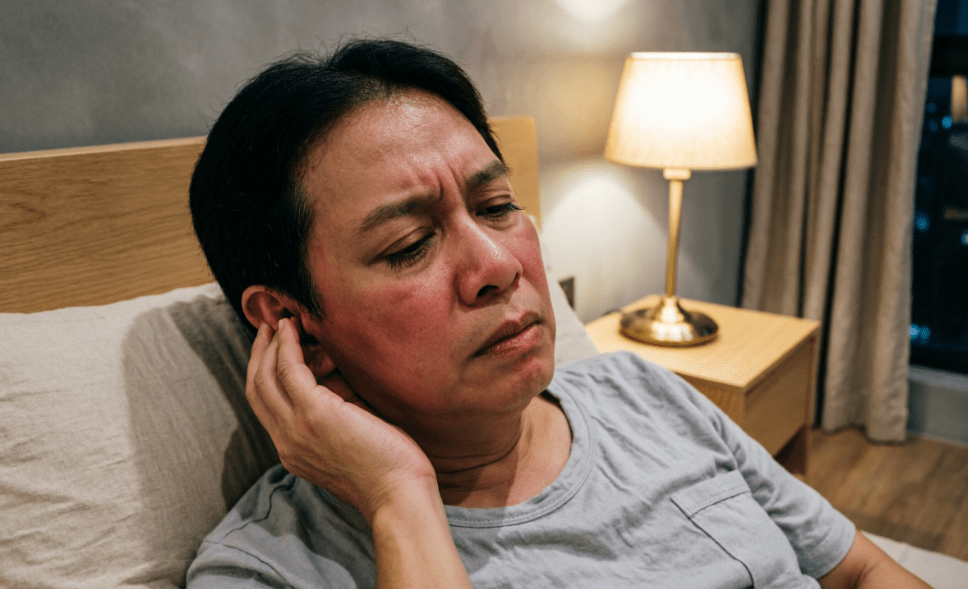
2) Reduced Distractions Make Pain More Noticeable
Daytime life is busy. Work, conversations, and activities distract your brain from pain signals.
Nighttime is different.
The environment becomes quiet. Your brain has fewer external distractions. Consequently, pain signals become easier to notice.
Pain specialists call this increased pain perception.
Think of it like a ticking clock. During the day, you barely hear it. At night, the sound suddenly feels loud.
The same concept applies to ear pain.
3) Inflammation Peaks During the Night
Your immune system follows a circadian rhythm. This means inflammation can increase during certain hours.
Research published in ENT and inflammation related medical journals shows that inflammatory chemicals often rise at night.
These chemicals include:
- Cytokines
- Prostaglandins
- Histamine
These substances irritate pain receptors.
When inflammation increases in an infected ear, nighttime pain becomes stronger.
4) Sinus and Nasal Congestion Gets Worse When Lying Down
Many ear problems are closely linked to the nose and sinuses.
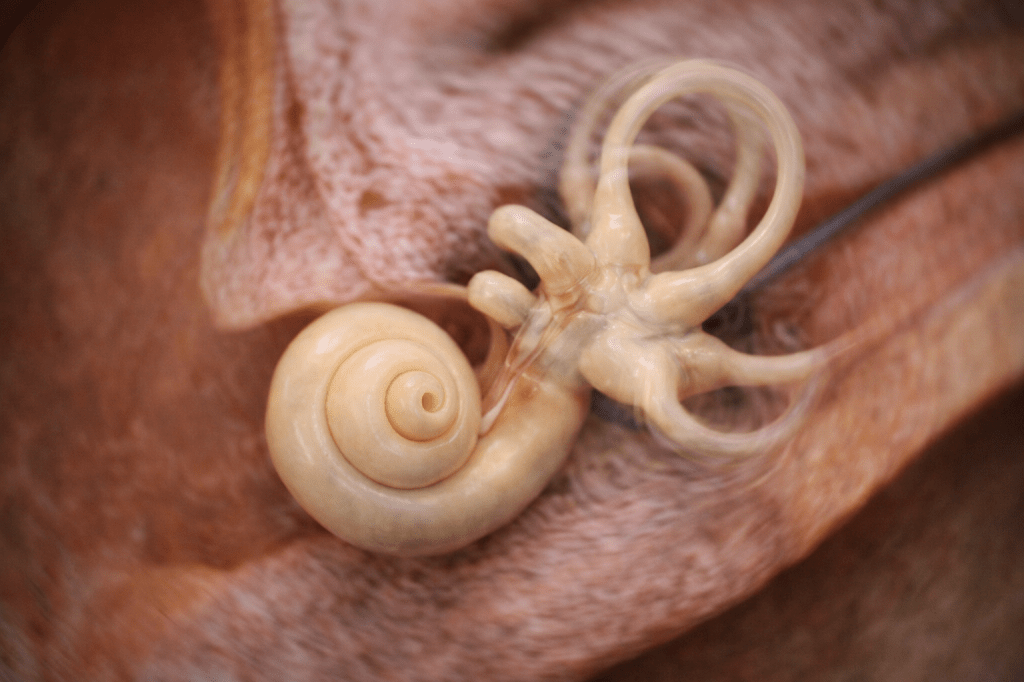
The ear connects to the back of the nose through the Eustachian tube. This small tube regulates pressure inside the middle ear.
When you lie down:
- Nasal congestion can worsen
- Sinus pressure may increase
- Eustachian tube function becomes less effective
This leads to a pressure imbalance in the middle ear.
The result is a deep, aching ear pain that often appears during the night.

5) Tooth Grinding and Jaw Tension at Night
Interestingly, not all nighttime ear pain comes from the ear itself.
Some cases originate from the jaw joint. This joint is called the temporomandibular joint.
Many people grind their teeth during sleep. This is called bruxism.
Jaw clenching can irritate nerves that also supply the ear. The brain may interpret this pain as ear pain.
ENT specialists often see this pattern in adults with normal ear examinations.

When Nighttime Ear Pain Needs Medical Attention
Occasional ear discomfort may resolve on its own. However, certain symptoms require medical evaluation.
Seek medical attention if you notice:
- Ear pain lasting more than 48 hours
- Fever
- Hearing loss
- Ear discharge
- Severe pain that wakes you from sleep
- Dizziness or imbalance
- One-sided Facial weakness
These signs may indicate infections, middle ear fluid, or other serious ENT conditions.
Early treatment can prevent complications.
Practical Tips to Reduce Nighttime Ear Pain
While waiting for medical evaluation, some simple measures may help.
Try the following:
- Sleep with your head slightly elevated
- Use warm compresses over the ear
- Avoid inserting objects into the ear
- Stay well hydrated
- Treat nasal congestion if present
However, persistent pain should always be assessed by an ENT specialist.
Why This Matters for Patients in Kuala Lumpur
Kuala Lumpur’s humid climate and frequent upper respiratory infections can contribute to ear related conditions.
Allergies, sinusitis, and viral infections are common triggers for ear pressure and nighttime ear pain.
If symptoms persist, a proper ear examination is essential. Early diagnosis allows effective treatment and faster recovery.
When to See an ENT Specialist in Kuala Lumpur
Persistent ear pain should never be ignored, especially if it disrupts sleep.
If you experience ear pain that worsens at night, it may indicate infection, pressure imbalance, or Eustachian tube dysfunction.
Booking a consultation with an ENT specialist in Kuala Lumpur allows proper diagnosis and targeted treatment before the condition worsens.
– Reviewed by Dr Ameen, ENT Specialist, Kuala Lumpur









 Dr. Ameen, ENT Specialist in Kuala Lumpur
Leave a comment