


Sudden or Gradual Hearing Problems and When to See an ENT Specialist
Hearing loss can develop suddenly or gradually, affecting one or both ears. Many adults ignore early hearing problems, assuming they are temporary or age-related. However, untreated hearing loss can significantly impact communication, work performance, safety, and quality of life.
As an ENT specialist, I frequently see patients who delay assessment for months or years, only seeking help when hearing loss begins to interfere with daily activities. Early diagnosis is crucial, as some forms of hearing loss are treatable or reversible if addressed promptly.
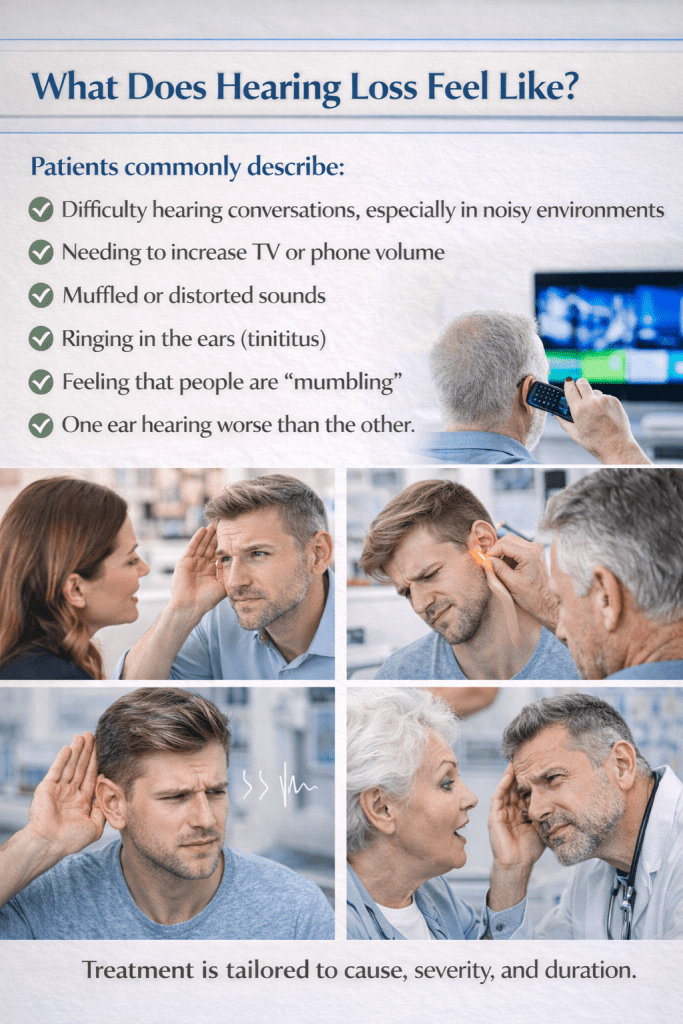
What Does Hearing Loss Feel Like?
Patients commonly describe:
- Difficulty hearing conversations, especially in noisy environments
- Needing to increase TV or phone volume
- Muffled or distorted sounds
- Ringing in the ears (tinnitus)
- Feeling that people are “mumbling”
- One ear hearing worse than the other
Hearing loss may be sudden or progressive, and either pattern requires proper evaluation.
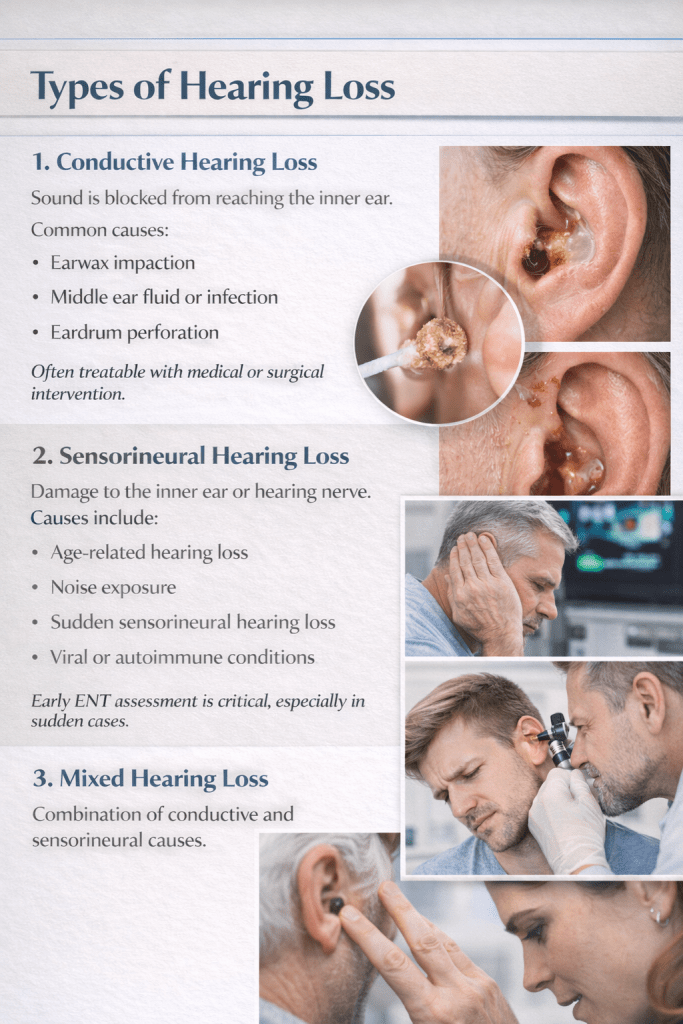
Types of Hearing Loss
1. Conductive Hearing Loss
Sound is blocked from reaching the inner ear.
Common causes:
- Earwax impaction
- Middle ear fluid or infection
- Eardrum perforation
Often treatable with medical or surgical intervention.
2. Sensorineural Hearing Loss
Damage to the inner ear or hearing nerve.
Causes include:
- Age-related hearing loss
- Noise exposure
- Sudden sensorineural hearing loss
- Viral or autoimmune conditions
Early ENT assessment is critical, especially in sudden cases.
3. Mixed Hearing Loss
Combination of conductive and sensorineural causes.
🚨 Sudden Hearing Loss: A Medical Emergency
Sudden hearing loss occurring over hours or days, especially in one ear, should be treated as an ENT emergency.
Seek urgent ENT care if hearing loss is:
- Sudden
- Associated with tinnitus or dizziness
- Unilateral (one-sided)
Prompt treatment improves the chance of hearing recovery.
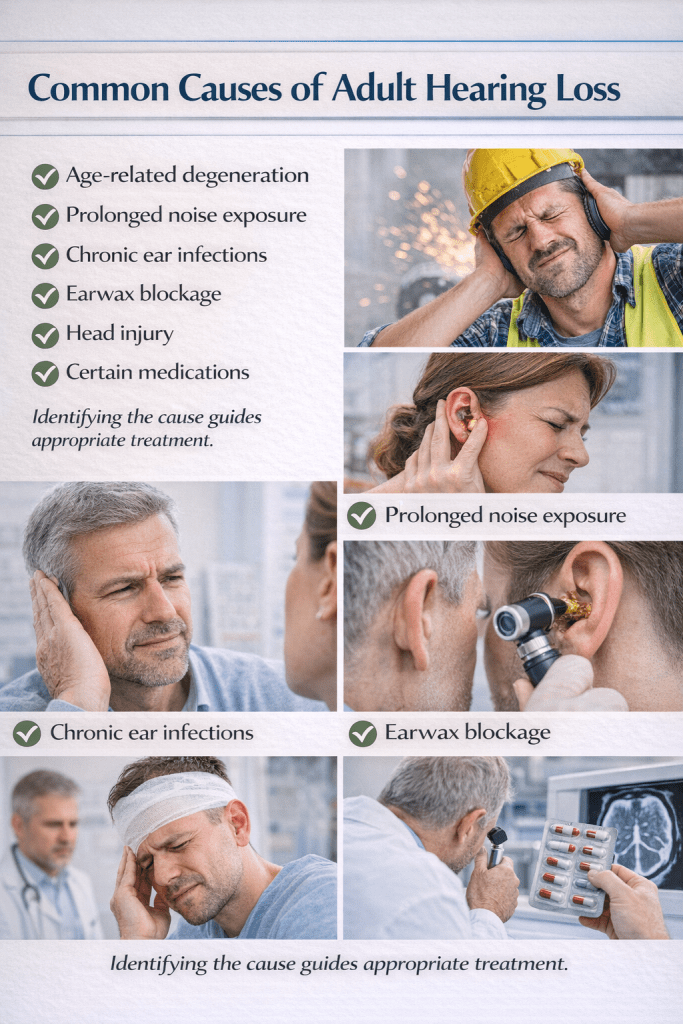
Common Causes of Adult Hearing Loss
- Age-related degeneration
- Prolonged noise exposure
- Chronic ear infections
- Earwax blockage
- Head injury
- Certain medications
Identifying the cause guides appropriate treatment.
How an ENT Specialist Evaluates Hearing Loss
ENT evaluation includes:
- Detailed hearing history
- Ear examination
- Audiometry (hearing test)
- Tympanometry (middle ear assessment)
- Imaging (CT or MRI) if indicated
This approach ensures accurate diagnosis, not assumption.
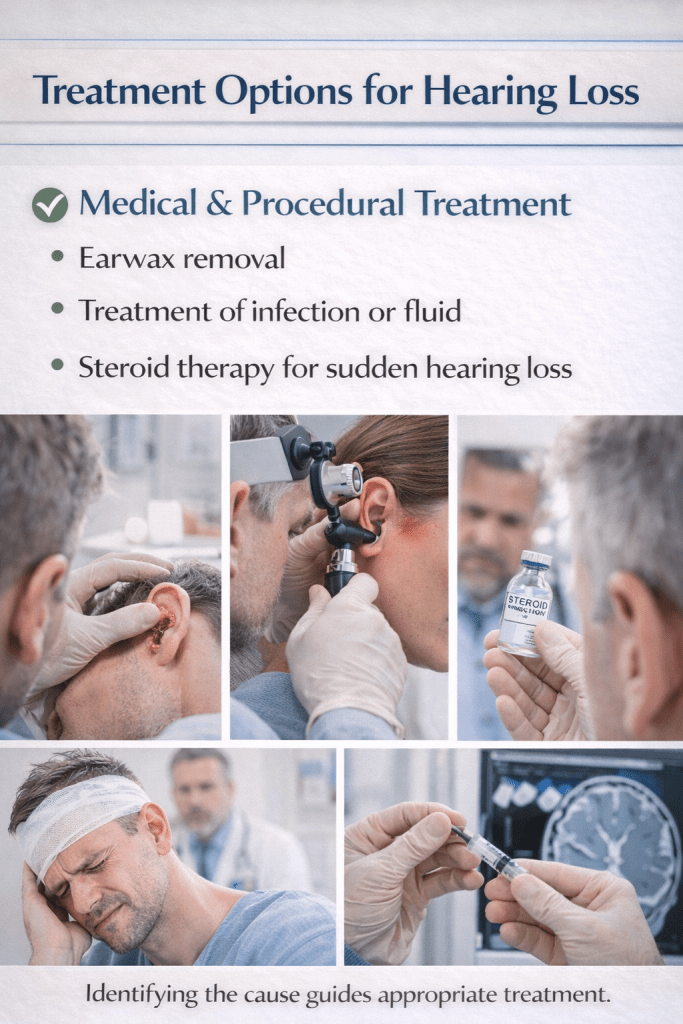
Treatment Options for Hearing Loss
✅ Medical & Procedural Treatment
- Earwax removal
- Treatment of infection or fluid
- Steroid therapy for sudden hearing loss
✅ Hearing Rehabilitation
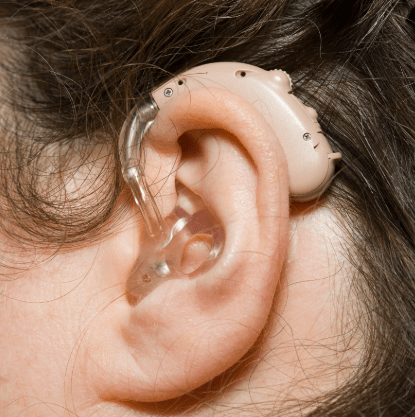
- Hearing aids
- Assistive listening devices
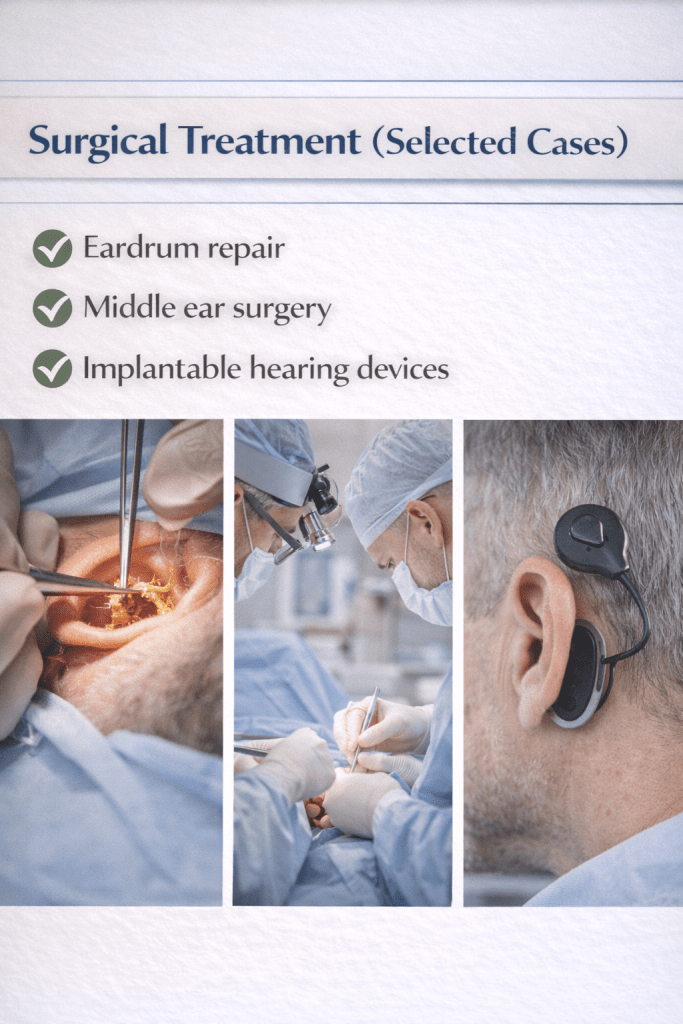
✅ Surgical Treatment (Selected Cases)
- Eardrum repair
- Middle ear surgery
- Implantable hearing devices (e.g. cochlear implant)
Treatment is individualised based on cause and severity.
Frequently Asked Questions (FAQ)
Q: Is hearing loss part of normal ageing?
Some age-related loss is common, but not all hearing loss should be ignored.
Q: Can hearing loss be reversed?
Some types are reversible if treated early.
Q: Should I get my hearing checked if only one ear is affected?
Yes. One-sided hearing loss always requires ENT assessment.
When Should You See an ENT Specialist in Kuala Lumpur?
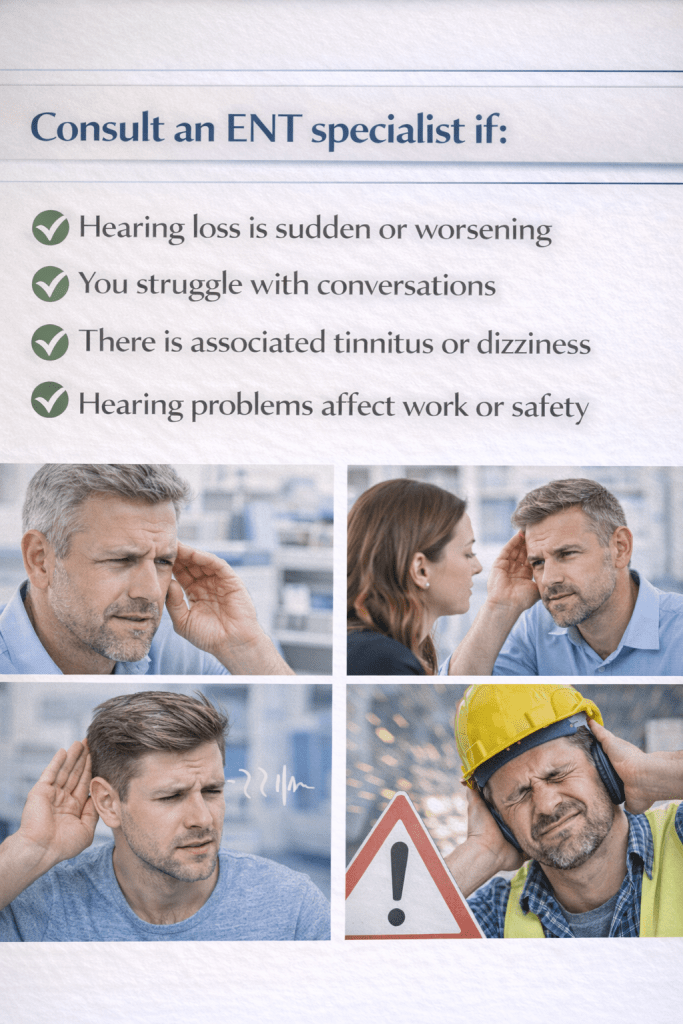
Consult an ENT specialist if:
- Hearing loss is sudden or worsening
- You struggle with conversations
- There is associated tinnitus or dizziness
- Hearing problems affect work or safety
Early assessment protects long-term hearing health.
👨⚕️ ENT Specialist’s Perspective
Hearing loss should never be dismissed without proper evaluation. From an ENT perspective, distinguishing between conductive and sensorineural causes is essential. Timely diagnosis allows appropriate treatment, hearing preservation, and rehabilitation, preventing unnecessary long-term disability.
Reviewed by Dr Ameen, ENT Specialist, Kuala Lumpur










 Dr. Ameen, ENT Specialist in Kuala Lumpur