



AI in Nose and Sinus Disorders – Precision Diagnosis and Smarter Sinus Treatment in Kuala Lumpur

Nasal and sinus problems are among the most common chronic ENT complaints in Kuala Lumpur, affecting both adults and children. Symptoms such as persistent nasal blockage, facial pressure, postnasal drip, reduced smell, and recurrent infections frequently bring patients to clinics and hospitals. Despite their prevalence, sinus conditions are often overdiagnosed, under-stratified, or treated empirically, leading to prolonged symptoms and frustration.

Chronic rhinosinusitis, in particular, is a complex condition with multiple underlying mechanisms. Traditional diagnosis relies on symptom duration, nasal endoscopy, and CT imaging. However, interpreting these findings can vary between clinicians, especially when disease severity is borderline. Artificial intelligence (AI) is now improving how sinus disease is evaluated, allowing for more precise diagnosis and personalised treatment decisions.

Why Sinus Disease Is Difficult to Diagnose Accurately
Sinus symptoms are non-specific. Nasal congestion, facial pressure, and nasal discharge may occur in:
- Viral upper respiratory infections
- Allergic rhinitis
- Chronic sinusitis
- Non-sinus facial pain syndromes
In busy Kuala Lumpur clinics, patients are often treated empirically with repeated courses of antibiotics or nasal sprays before a definitive diagnosis is made. This can lead to:
- Inappropriate antibiotic use
- Delayed specialist referral
- Progression to chronic disease
Even when a CT scan is performed, interpretation depends heavily on clinician experience. Mild mucosal thickening, anatomical variants, and post-inflammatory changes can be difficult to correlate with symptoms.

AI-Powered CT Scan Analysis in Sinus Disease
Automated and Objective Imaging Interpretation
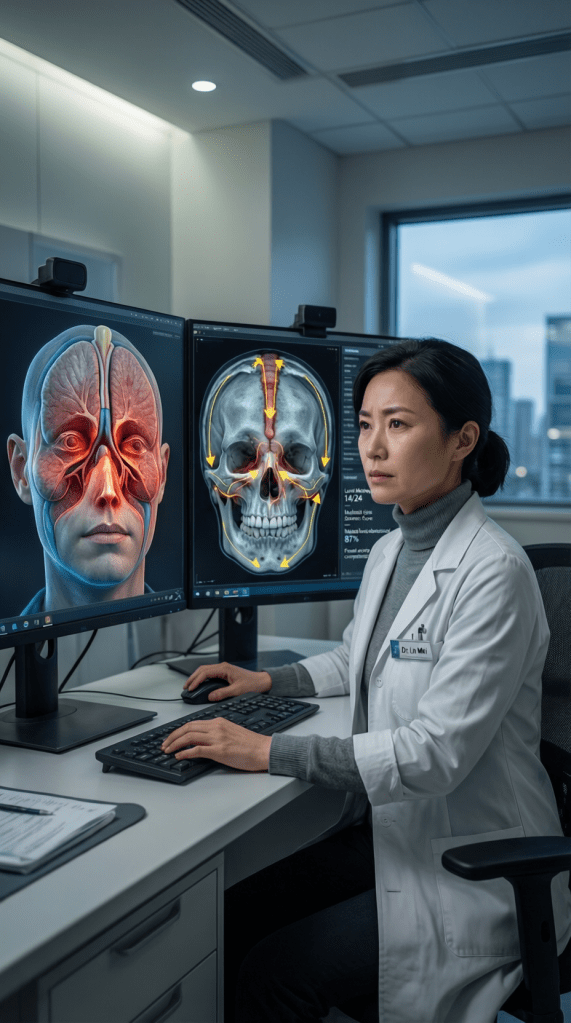
Modern AI systems can analyse sinus CT scans in seconds, producing consistent and reproducible results. These tools can:
- Automatically score sinus disease severity
- Map blocked drainage pathways
- Identify anatomical variations affecting airflow and drainage
This reduces subjectivity and helps ENT specialists make evidence-based decisions, particularly in patients with borderline imaging findings.
Better Selection for Sinus Surgery
Not all patients with sinus symptoms benefit from surgery. AI models can now predict which patients are most likely to improve with:
- Endoscopic sinus surgery (ESS)
- Balloon sinuplasty
- Continued medical therapy
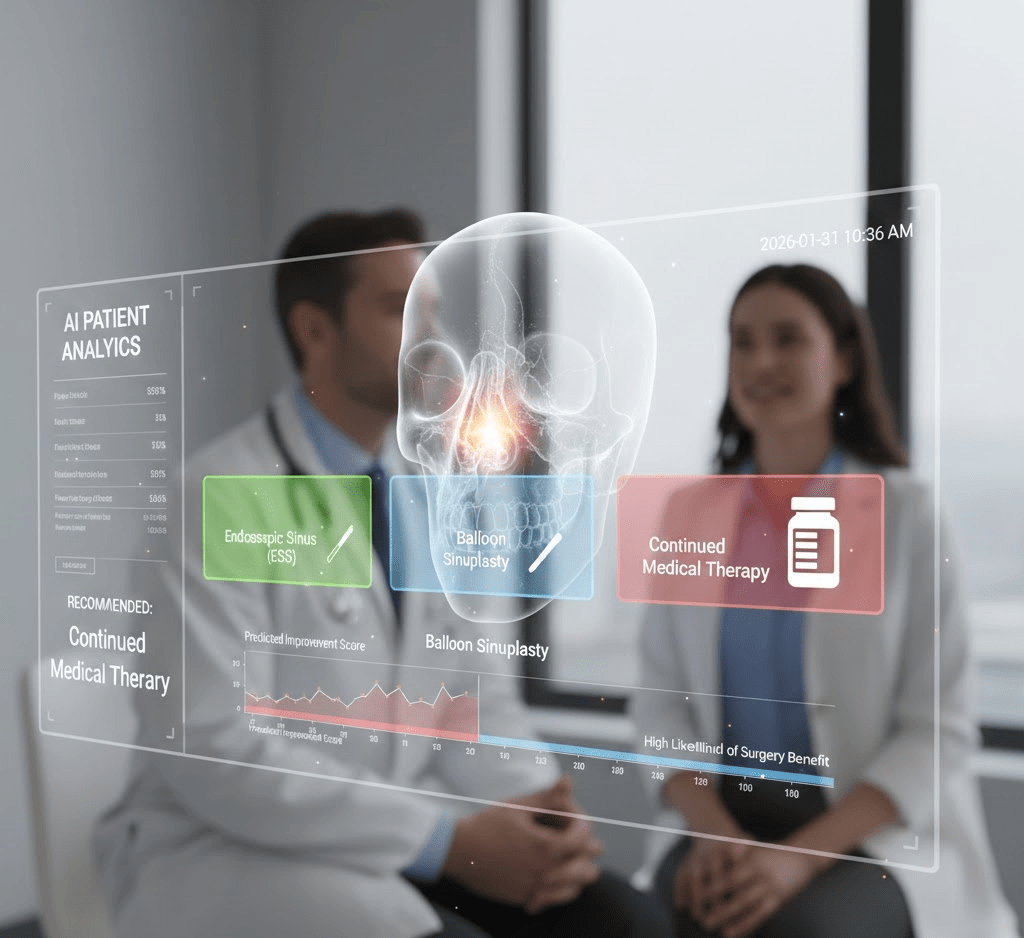
By analysing imaging patterns and disease distribution, AI helps avoid unnecessary procedures while ensuring that patients who genuinely need surgery are identified earlier.
Differentiating Allergic Rhinitis from Sinus Infection
One of the most common diagnostic dilemmas in ENT practice is distinguishing:
- Allergic rhinitis
- Bacterial sinusitis
- Mixed inflammatory disease
AI-assisted nasal endoscopy analysis evaluates subtle features such as:
- Mucosal colour changes
- Texture and swelling patterns
- Behaviour of nasal secretions
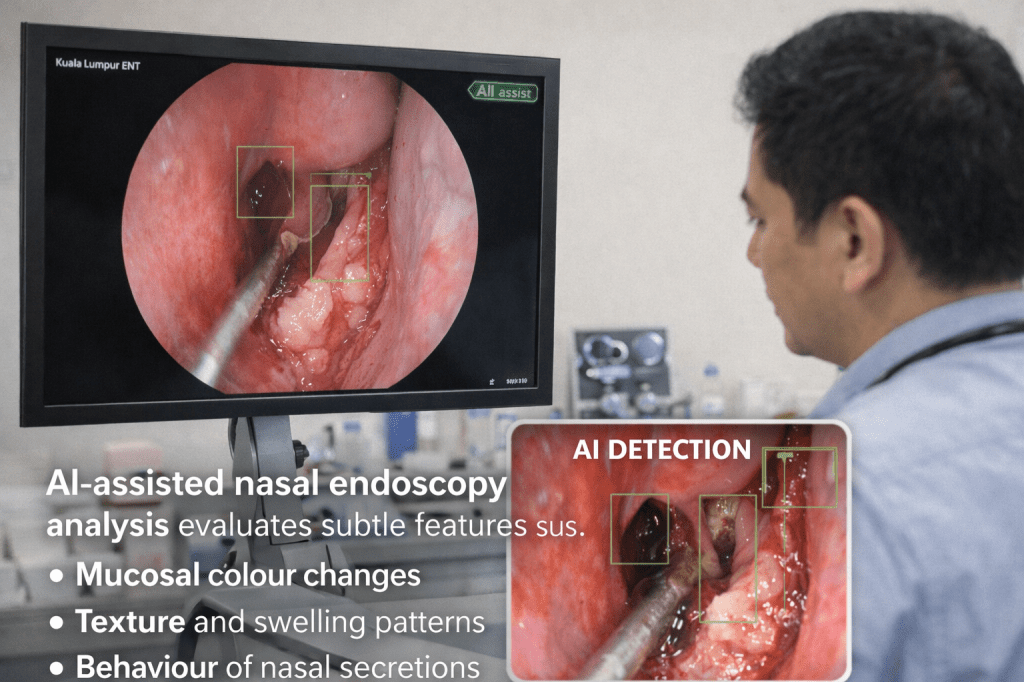
These features are often difficult to quantify consistently by the human eye alone. AI helps detect patterns that suggest inflammation rather than infection, reducing unnecessary antibiotic prescriptions.
Clinical Benefits for Patients in Kuala Lumpur
For patients, AI-enhanced sinus assessment offers several advantages:
- Faster and more accurate diagnosis
- Reduced trial-and-error treatment
- More targeted medication use
- Better surgical outcomes when surgery is needed
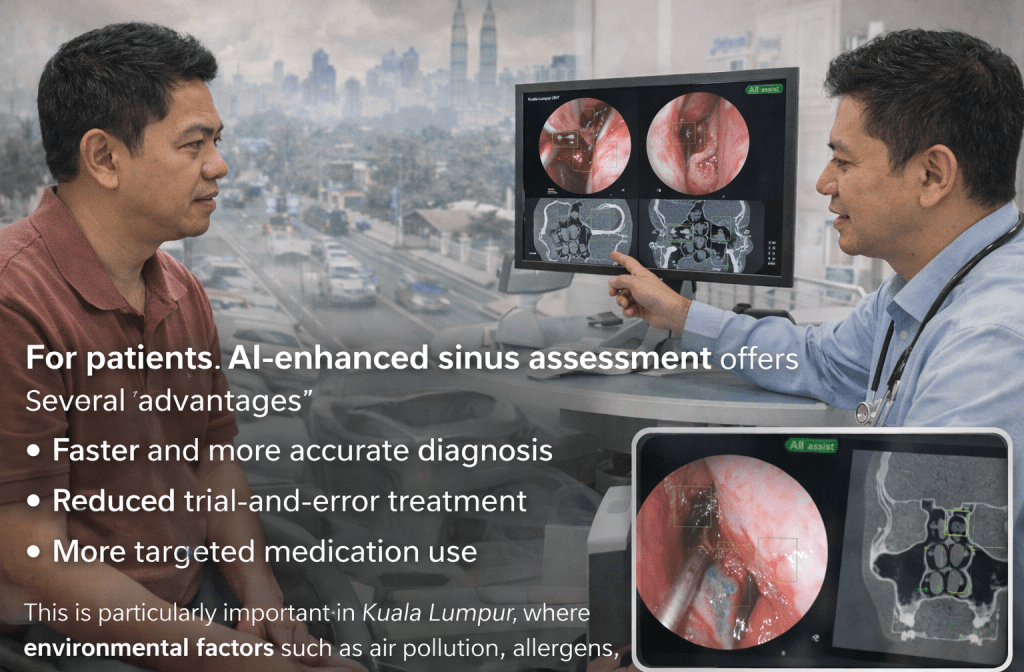
This is particularly important in Kuala Lumpur, where environmental factors such as air pollution, allergens, and urban living contribute to a high burden of nasal and sinus disease.
Supporting, Not Replacing, ENT Expertise
AI does not replace nasal endoscopy or specialist assessment. Instead, it provides:
- Objective data to support clinical judgement
- Standardised interpretation across providers
- Improved communication between doctors and patients
ENT specialists remain responsible for integrating AI findings with symptoms, examination, and patient preferences.
Reducing Over-Treatment and Improving Long-Term Outcomes
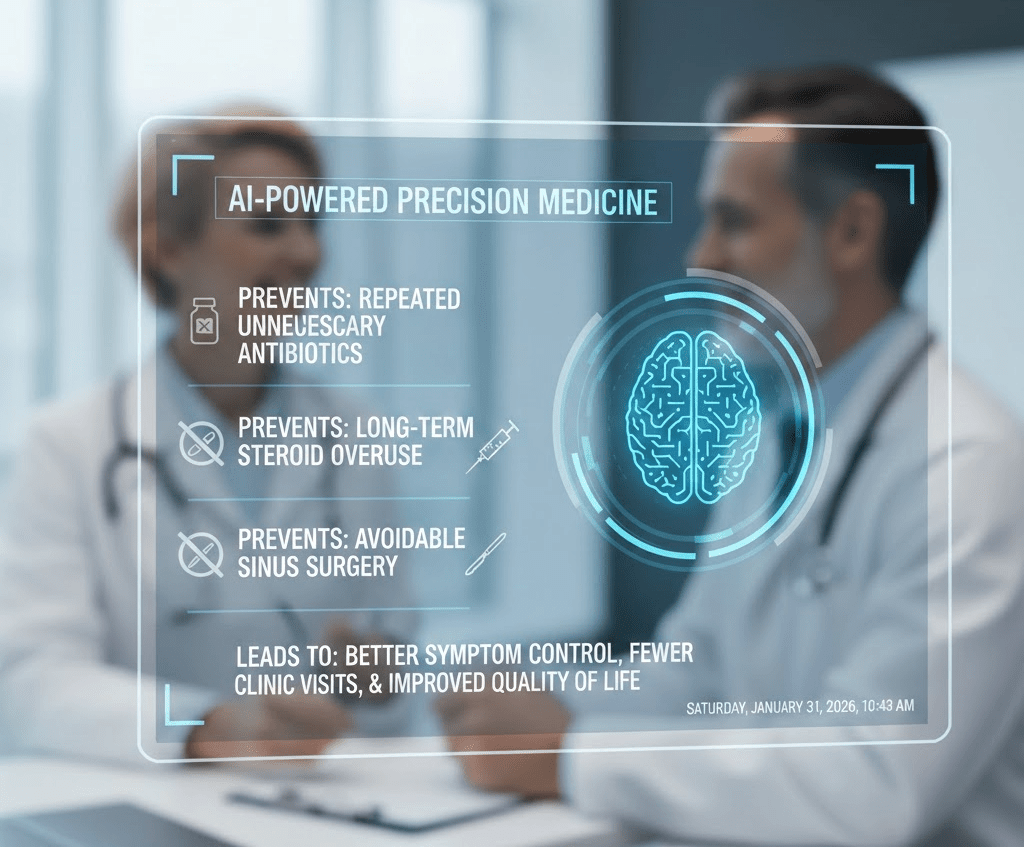
By identifying the true cause of symptoms, AI helps prevent:
- Repeated unnecessary antibiotics
- Long-term steroid overuse
- Avoidable sinus surgery
This leads to better symptom control, fewer clinic visits, and improved quality of life.
Reviewed by Dr Ameen, ENT Specialist, Kuala Lumpur








 Dr. Ameen, ENT Specialist in Kuala Lumpur
Leave a comment