
Greetings to all,
Today, I will be sharing a paper (abstract) from the renowned ENT journal, The Laryngoscope. The HKL/HTA ENT team usually receives numerous referrals from our colleagues at Institut Jantung Negara (IJN) for the assessment of airways in patients after cardiac surgery. Some of these patients have experienced complications post-operatively. For instance, there have been cases of left vocal fold palsy due to damage in the left recurrent laryngeal nerve, resulting in issues such as aspirations and hoarseness.
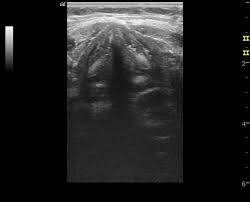
The paper presented below suggests the utilization of laryngeal ultrasound (LUS) as a screening tool for detecting Vocal Fold Motion Impairment (VFMI). LUS has demonstrated a high accuracy in detecting VFMI and holds the potential to predict post-operative aspiration.
Link : https://onlinelibrary.wiley.com/doi/full/10.1002/lary.31000


Abstract
Introduction
Vocal fold motion impairment (VFMI) is a known consequence after high-risk cardiac surgery. We implemented a universal laryngeal ultrasound (LUS) screening protocol for VFMI after the Norwood and aortic arch surgery. We hypothesized that LUS would accurately identify VFMI and predict postoperative aspiration.
Methods
We implemented a screening algorithm with LUS for patients undergoing high-risk cardiac surgery at a tertiary care pediatric hospital. Positively screened patients underwent flexible nasolaryngoscopy (FNL). Patients with an abnormal FNL underwent a video-fluoroscopic swallow study (VFSS). Patient demographics, length of stay, and swallowing outcomes were assessed. Two-tailed chi square and Wilcoxon rank sum tests were used to assess for differences.
Results
Sixty-seven patients underwent either Norwood or arch reconstruction over a 16-month period and underwent universal LUS. The average birth weight was 3.24 kg (SD 0.57). Of the 67 patients, VFMI was identified by LUS and 100% confirmed on FNL in 58.21% (n = 39/67) of patients. Aspiration and penetration on VFSS were higher in the group with VFMI as compared with those without VFMI (53.8% vs. 21.4%, p = 0.008). There was no difference in length of stay between patients who did not have a diagnosis of VFMI and those found to have VFMI (41.0 days vs 45.3 days p = 0.73).
Conclusions
Universal LUS screening for patients following high-risk cardiac surgery may lead to earlier identification of postoperative VFMI and aspiration. Recognition of VFMI through this universal screening program could lead to earlier interventions and possibly improved swallowing outcomes.
Level of evidence
3 Laryngoscope, 2023

Based on these findings, I hope that our counterparts at IJN could consider arranging early laryngeal ultrasounds for patients who are suspected of experiencing vocal cord palsy after surgery, even before they are referred to the ENT department. Such proactive measures would greatly benefit the patients :).


Leave a Reply